











































Youth Friendly Space (YFS) - A Creative Strategy to Promote Sexual and Reproductive Health and Rights (SRHR) Education in Pakistan
Summary:
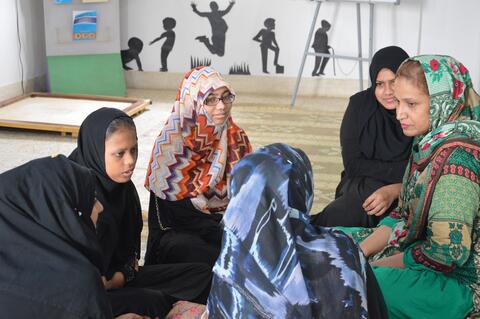
With 54% inhabitants under the age of 20, Pakistan plays host to one of the youngest populations globally. Despite the myriad, young people remain the most underserved segment with regards to sexual and reproductive health rights (SRHR). In multiple studies, young people have expressed their desire to access information around SRHR, however prevailing sociocultural norm discourages conversations among young people, especially girls and unmarried individuals, around bodily autonomy and sexuality. This restricts young people from accessing accurate information and reliable services. Aahung implemented a project focusing on improving SRHR knowledge amongst adolescents, so that they are better equipped for marital life and are aware of their rights and responsibilities. However, as discussed above, given the sensitivity of these issues within Pakistan, it is important that Aahung provides adolescents with an environment where they can feel safe while discussing these issues. To address these concerns, Aahung established Youth Friendly Spaces (YFS) in partnership with the local government. The purpose of the YFS was to provide a platform for both in-school and out-of-school youth to come together in a safe environment and learn about SRHR and other youth-related issues. The programme combined formal and informal activities which played a significant role towards encouraging youth to engage with the YFS. Since there are both school going and out-of-school youth in YFS, the combination of both formal and informal activities effectively engaged them, as they come to YFS in their leisure time to socialize and enjoy as well.
Background/Objectives:
This paper presents an innovative approach, Youth Friendly Spaces, to promote sexual and reproductive health rights among young out-of-school and in-school individuals in Pakistan.
Description of Intervention and/or Methods/Design:
YFS initiative was undertaken in collaboration with the local government under the Sukh Project, which has not only helped with the procurement of resources but has also provided assurance about its sustainability. YFS implemented a two-pronged approach: the YFS staff undertook a variety of initiatives that focused on community engagement and gaining community trust, and it employed the 'affective education model', which focuses on the development of intrapersonal resources and social competencies, as opposed to the 'information deficient model', which simply focuses on imparting information. The space and the basic infrastructure for YFS was provided by the local government in a government school. This initiative was launched in July 2016. To date, 571 youth have been registered at the YFS and around 25 health sessions were conducted every month, about 45 young people attending these sessions on a regular basis.
Results/Lessons Learned:
1. YFS as a conceptual space: YFS was conceived as an accessible space for the community around it, so that the youth had a safe environment to learn about healthy and age-appropriate SRHR behaviors. As a result, the YFS has not only been able to help youth with SRHR-related issues but has also been able to engage with them on issues that go beyond the domain of SRHR. It has been observed that the knowledge and skills they acquired through these YFS sessions, also help the participants in efficiently navigating through other challenges of adolescence.
2. A Youth-Focused Approach: YFS was perceived as a success due to a variety of factors including flexible hours, personalized counseling sessions, confidentiality, co-curricular activities, visibility in the community, and parental involvement and consent. Adolescent-specific activities and interior decoration has allowed YFS to establish an active relationship with the youth.
Discussion/Implications for the Field:
It is very important that prior to any such interventions, besides accounting for the SRHR needs of adolescents, the project must also take into consideration the barriers from the socio-cultural contexts in which the intervention is being carried out. The case studies from YFS also imply that tailoring the content and the approach of the interventions, in accordance with the cultural nuances of the local context, also ensures that the interventions are both sustainable and socially acceptable. Furthermore, the ownership taken by the local government in such community interventions, is effective in promptly gaining community's trust and involvement.
Abstract submitted by:
Sana Tajuddin - Aahung
Aisha Ijaz -Aahung
Junaid-ur-Rehman Siddiqui - Aahung
Approved abstract for the postponed 2020 SBCC Summit in Marrakech, Morocco. Provided by the International Steering Committee for the Summit. Image credit: Aahung