










































Community engagement to improve health care delivery: evidence, limitations, and new directions
Summary:
In 2018, 5.3 million children died before reaching their fifth birthday, largely from preventable causes of death. Motivated by these statistics, many policymakers have invested in programs that enhance beneficiary involvement in monitoring health care provision. By strengthening the transparency and accountability of public health systems, these programs aim to empower citizens to improve the responsiveness and effectiveness of the health system. Indeed, several programs that have aimed to spark social and behavior change to inform communities and get them actively involved in improving local health services have been implemented over the past two decades. Given that beneficiaries have the most to benefit from improved health services, and that empowering local communities can in itself be an important objective, such programs have gained much traction at a global scale. Despite the enthusiasm for this approach, recent research has shown that the effectiveness of such community-based monitoring program is mixed. Understanding when and why these programs have not translated into improved health provision is key to design better programs that spark effective citizen action and generate positive change. This session will review rigorous randomized evaluations from Uganda, Tanzania, and Indonesia to discuss the results of community-based monitoring programs and potential reasons for their limited success. We will review important factors to consider when pursuing community-based programs and highlight open questions for the field. In doing so, we can better innovate to improve future community-based monitoring programs and improve health equity.
Background/Objectives:
Access to high-quality health care remains a major problem in many developing countries. To address this issue, policymakers have explored community scorecards, social audits, and other community-based monitoring programs as tools to catalyze community engagement and increase the transparency and accountability of health care delivery. This session will review recent research on community engagement programs to increase access to high-quality health care and explore the potential limitations of such programs. It will consider the results of research in three countries, and provide actionable policy recommendations for future iterations of community-based monitoring programs.
Description of Intervention and/or Methods/Design:
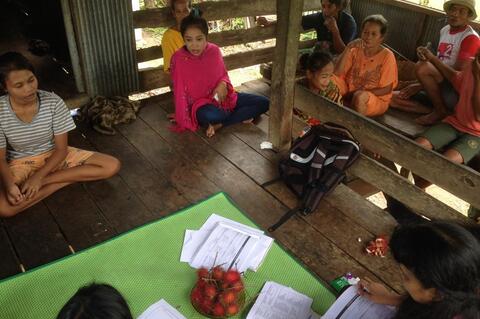
This presentation reviews the results of four randomized evaluations of community-based monitoring programs in Uganda, Tanzania, and Indonesia. The evaluations in Tanzania and Indonesia were mixed-methods, employing focus group discussions, ethnographic studies, interviews, and systematic observations, in addition to the RCT. These programs all held facilitated meetings with community members to discuss local health conditions and explore community-driven solutions to improve them. Variations across treatment arms, including the presence or absence of report cards with quantitative metrics for health care performance, enable direct impact comparisons and suggestive evidence of key design features. Across countries, these programs were designed to be non-prescriptive, offering space for communities in widely different circumstances to leverage local knowledge and collectively decide on context-appropriate activities. With an eye towards scalability and sustainability, they did not include material, technical, or relational resources external to the community.
Results/Lessons Learned:
Current evidence suggests that community-based monitoring programs have not had consistent impacts on improving health service delivery or health outcomes. In Uganda, initial research showed that a community-based monitoring program significantly improved health care delivery and health outcomes, including a 33 percent decline in under-five mortality rates. Ten years later, however, a new study of the program showed no improvements in community participation or health services. The program's reduced effectiveness may stem from improved local health conditions: it may simply be easier to improve health outcomes when they start at a lower level or when the health intervention space is less crowded. In Tanzania and Indonesia, programs had high levels of sustained community participation in the program. However, few communities were able to successfully navigate the complexities of identifying problems, planning effective solutions, and implementing changes to accomplish tangible improvements in access to quality care.
Discussion/Implications for the Field:
Given the popularity of community-based monitoring programs, confronting their potential limitations is vital for evidence-informed policymaking. By synthesizing these studies, we can identify contexts or design features that may make these programs more successful. Baseline health conditions and social cohesion may substantially shape impacts. Data on health system performance, in addition to facilitated meetings, may be crucial to focus community efforts on tractable issues. The session will end with areas for future research and innovation, including how technology could more cost-effectively collect local healthcare data. Innovations in participant selection, facilitation, and material support should also be explored.
Abstract submitted by:
Caroline Tangoren - Poverty Action Lab
David Alzate - Poverty Action Lab
Adil Ababou - Poverty Action Lab
In 2018, 5.3 million children died before reaching their fifth birthday, largely from preventable causes of death. Motivated by these statistics, many policymakers have invested in programs that enhance beneficiary involvement in monitoring health care provision. By strengthening the transparency and accountability of public health systems, these programs aim to empower citizens to improve the responsiveness and effectiveness of the health system. Indeed, several programs that have aimed to spark social and behavior change to inform communities and get them actively involved in improving local health services have been implemented over the past two decades. Given that beneficiaries have the most to benefit from improved health services, and that empowering local communities can in itself be an important objective, such programs have gained much traction at a global scale. Despite the enthusiasm for this approach, recent research has shown that the effectiveness of such community-based monitoring program is mixed. Understanding when and why these programs have not translated into improved health provision is key to design better programs that spark effective citizen action and generate positive change. This session will review rigorous randomized evaluations from Uganda, Tanzania, and Indonesia to discuss the results of community-based monitoring programs and potential reasons for their limited success. We will review important factors to consider when pursuing community-based programs and highlight open questions for the field. In doing so, we can better innovate to improve future community-based monitoring programs and improve health equity.
Background/Objectives:
Access to high-quality health care remains a major problem in many developing countries. To address this issue, policymakers have explored community scorecards, social audits, and other community-based monitoring programs as tools to catalyze community engagement and increase the transparency and accountability of health care delivery. This session will review recent research on community engagement programs to increase access to high-quality health care and explore the potential limitations of such programs. It will consider the results of research in three countries, and provide actionable policy recommendations for future iterations of community-based monitoring programs.
Description of Intervention and/or Methods/Design:
This presentation reviews the results of four randomized evaluations of community-based monitoring programs in Uganda, Tanzania, and Indonesia. The evaluations in Tanzania and Indonesia were mixed-methods, employing focus group discussions, ethnographic studies, interviews, and systematic observations, in addition to the RCT. These programs all held facilitated meetings with community members to discuss local health conditions and explore community-driven solutions to improve them. Variations across treatment arms, including the presence or absence of report cards with quantitative metrics for health care performance, enable direct impact comparisons and suggestive evidence of key design features. Across countries, these programs were designed to be non-prescriptive, offering space for communities in widely different circumstances to leverage local knowledge and collectively decide on context-appropriate activities. With an eye towards scalability and sustainability, they did not include material, technical, or relational resources external to the community.
Results/Lessons Learned:
Current evidence suggests that community-based monitoring programs have not had consistent impacts on improving health service delivery or health outcomes. In Uganda, initial research showed that a community-based monitoring program significantly improved health care delivery and health outcomes, including a 33 percent decline in under-five mortality rates. Ten years later, however, a new study of the program showed no improvements in community participation or health services. The program's reduced effectiveness may stem from improved local health conditions: it may simply be easier to improve health outcomes when they start at a lower level or when the health intervention space is less crowded. In Tanzania and Indonesia, programs had high levels of sustained community participation in the program. However, few communities were able to successfully navigate the complexities of identifying problems, planning effective solutions, and implementing changes to accomplish tangible improvements in access to quality care.
Discussion/Implications for the Field:
Given the popularity of community-based monitoring programs, confronting their potential limitations is vital for evidence-informed policymaking. By synthesizing these studies, we can identify contexts or design features that may make these programs more successful. Baseline health conditions and social cohesion may substantially shape impacts. Data on health system performance, in addition to facilitated meetings, may be crucial to focus community efforts on tractable issues. The session will end with areas for future research and innovation, including how technology could more cost-effectively collect local healthcare data. Innovations in participant selection, facilitation, and material support should also be explored.
Abstract submitted by:
Caroline Tangoren - Poverty Action Lab
David Alzate - Poverty Action Lab
Adil Ababou - Poverty Action Lab
Source
Approved abstract for the postponed 2020 SBCC Summit in Marrakech, Morocco. Provided by the International Steering Committee for the Summit. Image credit: Jessica Creighton