










































Trends in donor investment in social and behavior change
Summary:
Following up on the 2018 SBCC Summit, several donors that invest in SBC, including BMGF, USAID, World Bank, Hewlett, UNICEF, CIFF, Surgo, and Wellcome Trust, have met regularly to share learnings and improve coordination among their investments in the SBC sector. Participating donors have contributed information to create the Social and Behavior Change Investment Database, a database of investments that rely on SBC approaches and that are conducted in the geographies of India, Nigeria, Ethiopia, Burkina Faso, Kenya, DRC, and the Ouagadougou Partnership (OP) countries. This presentation will examine trends in donor investment in SBC based on analysis of the Social and Behavior Change Investment Database. Where, geographically, are donors' SBC investments active within these countries? What types of SBC programming are used (interpersonal communication; mass, digital, and social media; packages; provider SBC)? With which stakeholders, host country government agencies, and implementers do donors work? To what extent do SBC-reliant investments build local capacity? To what extent do investments use theory to guide design and evaluation? To what extent are investments evaluated? To what extent can the cost-effectiveness of SBC approaches be analyzed?
Background/Objectives:
The objectives of this work are to achieve greater impact from donor investment by facilitating stronger donor coordination and collaboration. Coordination and collaboration can reduce overlaps, fill gaps, and facilitate shared learning more effectively so as to best deploy scarce resources and achieve desired impact. The purpose of the research that will be presented is to characterize donor investment in social and behavior change, and to identify trends in the sector. The research focuses on donor investment in SBC in selected geographies: India, Nigeria, Ethiopia, Burkina Faso, Kenya, DRC, and the Ouagadougou Partnership (OP) countries.
Description of Intervention and/or Methods/Design:
Donors were invited to contribute brief descriptions of their investments that rely on SBC to a simple database. Characteristics of each investment included: geographic location; funding value (ceiling and annual); stakeholders and government partners; implementers; sector (including family planning/reproductive health, maternal and child health, nutrition, routine immunization, and malaria); design characteristics including use of theory of change, theory of human behavior, evaluation, and cost-effectiveness analysis; intended audiences; and type(s) of SBC as described by Avenir Health for Breathrough RESEARCH. More than a dozen donors contributed information about 300 investments that rely on SBC in the selected geographies.
Results/Lessons Learned:
Data cleaning and analysis of the dataset are ongoing at time of abstract submission (November 2019). Findings are expected in December.
Discussion/Implications for the Field:
Donors can collaborate by learning together, by planning together, and by investing together (LEARN-PLAN-DO). The Social & Behavior Change Investment database seeks to facilitate greater understanding of donors' approaches to investment in SBC-reliant programming in specific geographies. Understanding trends in donor investment can help identify gaps and overlaps in investment, and facilitate improved approaches for greater impact and sector-wide learning.
Abstract submitted by:
Catherine Harbour - Johns Hopkins
Sohail Agha - Gates Foundation
Hope Hempstone - USAID
Following up on the 2018 SBCC Summit, several donors that invest in SBC, including BMGF, USAID, World Bank, Hewlett, UNICEF, CIFF, Surgo, and Wellcome Trust, have met regularly to share learnings and improve coordination among their investments in the SBC sector. Participating donors have contributed information to create the Social and Behavior Change Investment Database, a database of investments that rely on SBC approaches and that are conducted in the geographies of India, Nigeria, Ethiopia, Burkina Faso, Kenya, DRC, and the Ouagadougou Partnership (OP) countries. This presentation will examine trends in donor investment in SBC based on analysis of the Social and Behavior Change Investment Database. Where, geographically, are donors' SBC investments active within these countries? What types of SBC programming are used (interpersonal communication; mass, digital, and social media; packages; provider SBC)? With which stakeholders, host country government agencies, and implementers do donors work? To what extent do SBC-reliant investments build local capacity? To what extent do investments use theory to guide design and evaluation? To what extent are investments evaluated? To what extent can the cost-effectiveness of SBC approaches be analyzed?
Background/Objectives:
The objectives of this work are to achieve greater impact from donor investment by facilitating stronger donor coordination and collaboration. Coordination and collaboration can reduce overlaps, fill gaps, and facilitate shared learning more effectively so as to best deploy scarce resources and achieve desired impact. The purpose of the research that will be presented is to characterize donor investment in social and behavior change, and to identify trends in the sector. The research focuses on donor investment in SBC in selected geographies: India, Nigeria, Ethiopia, Burkina Faso, Kenya, DRC, and the Ouagadougou Partnership (OP) countries.
Description of Intervention and/or Methods/Design:
Donors were invited to contribute brief descriptions of their investments that rely on SBC to a simple database. Characteristics of each investment included: geographic location; funding value (ceiling and annual); stakeholders and government partners; implementers; sector (including family planning/reproductive health, maternal and child health, nutrition, routine immunization, and malaria); design characteristics including use of theory of change, theory of human behavior, evaluation, and cost-effectiveness analysis; intended audiences; and type(s) of SBC as described by Avenir Health for Breathrough RESEARCH. More than a dozen donors contributed information about 300 investments that rely on SBC in the selected geographies.
Results/Lessons Learned:
Data cleaning and analysis of the dataset are ongoing at time of abstract submission (November 2019). Findings are expected in December.
Discussion/Implications for the Field:
Donors can collaborate by learning together, by planning together, and by investing together (LEARN-PLAN-DO). The Social & Behavior Change Investment database seeks to facilitate greater understanding of donors' approaches to investment in SBC-reliant programming in specific geographies. Understanding trends in donor investment can help identify gaps and overlaps in investment, and facilitate improved approaches for greater impact and sector-wide learning.
Abstract submitted by:
Catherine Harbour - Johns Hopkins
Sohail Agha - Gates Foundation
Hope Hempstone - USAID
Source
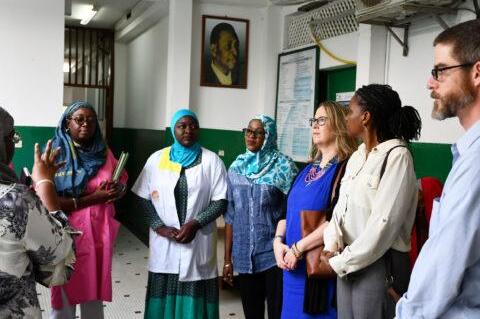
Approved abstract for the postponed 2020 SBCC Summit in Marrakech, Morocco. Provided by the International Steering Committee for the Summit. Image credit: Ouagadougou Partnership (OP)