










































Family Planning Awareness on Social Media; How far have we progressed?
Summary:
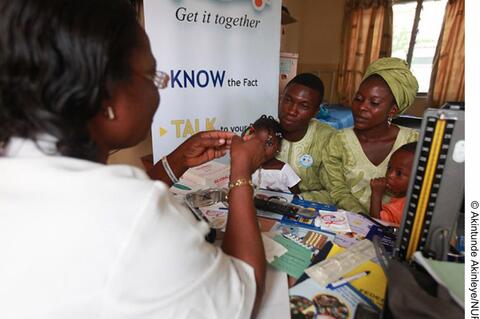
Family planning as a means of birth control is essential in a developing country like Nigeria bedevilled by numerous socio-economic and public health challenges. Social media helps to reach a large populace with family planning information and recent results from nationally representative surveys in Nigeria has confirmed the power of social media to reaching a large populace with family planning information. This validates the efforts of non-governmental organizations who have been leveraging on various social media platforms to propagate FP messages in a bid to promote FP uptake in the country. One of such messages is the Get It Together (Nigeria) family planning campaign that runs across the most popular social media platforms in Nigeria- Facebook, Twitter, Instagram, YouTube and LinkedIn. However, recent evidence still shows that women's involvement in family planning decision making is low in Nigeria, begging the question of the progress that have been made so far. Hence, this research evaluates the progress made by Get It Together (Nigeria) in propagating family planning messages on social media. Also, it examines the influence of exposure to family planning messages on contraceptive use in Nigeria. The result showed that YouTube was the platform where most people accessed these messages. Respondents who have heard a family planning message on social media are more than two times as likely to use contraceptives compared to those who have not. Socio-demographics of the respondents also adjusted the effect of social media on current use of FP in Nigeria.
Background/Objectives:
Recent results from nationally representative surveys in Nigeria has confirmed the power of social media to create the awareness on family planning information. This explains why campaigns such as Get It Together-Nigeria have seized this opportunity to get more people equipped with family planning information. It is important to evaluate the reach of the campaign in order to see if more efforts should be intensified. This research evaluates the progress made by Get It Together-Nigeria in propagating family planning messages on social media.
Description of Intervention and/or Methods/Design:
We utilized data of 11,365 women within the reproductive ages (1549 years) and 3,789 men within the reproductive ages (15-59) selected in a multi-stage stratified random sampling design. Data was collected across ten states of Niger, Kano, Ogun, Delta, Bauchi, Abia, Anambra, Plateau, Rivers and Taraba in Nigeria from January to March 2019. Data obtained from the study were analysed using STATA and presented in tables as frequencies and percentages as well as figures. Data queried from all social media platforms of GIT-NG during 13-month period of September, 2018 to September 2019 was also used to evaluate NURHI's efforts in projecting FP messages through social media. The odds of adopting any method of family planning due to the influence of family planning messages on social media by states were examined after adjusting for socio-demographic characteristics which includes age, parity, residence, marital status, education and religion.
Results/Lessons Learned:
The results showed that more than 9,916,976 million impressions on family planning have been made across the five major social media platforms of Facebook, Twitter, Instagram, YouTube and LinkedIn during the one-year period in view, with the highest number of impressions and engagement happening on YouTube. The results also showed that respondents who have been exposed to FP message on social media are more than two times as likely to use contraceptives compared to those who have not. Furthermore, the data showed across the states of Abia, Anambra, Bauchi, Plateau and Rivers that men and women who are exposed to social media were more than two times as likely to use contraceptives compared to women that were not exposed. Results from the adjusted model showed that level of education, religion, sex and age significantly adjusted the effect of social media on current use of FP in Nigeria.
Discussion/Implications for the Field:
Evidence from this intervention has helped us to established that propagating family planning messages through social media platforms looks extremely promising and that exposure to family planning messages and information can improve current use of family planning in Nigeria. This findings also suggest that social media platforms are very viable channels of communication for family planning messages thus corroborating with earlier documented research findings. As such, the evidences produced by this study is insightful and valuable to programmers and implementers interested in using new media to disseminate Family planning Information.
Abstract submitted by:
Segun Akinola - NUHRI
Ramatu Ada Ochekliye - NUHRI
Oluwatobi Alawode
Akinsewa Akiode - NUHRI
Mojisola Odeku - NUHRI
Family planning as a means of birth control is essential in a developing country like Nigeria bedevilled by numerous socio-economic and public health challenges. Social media helps to reach a large populace with family planning information and recent results from nationally representative surveys in Nigeria has confirmed the power of social media to reaching a large populace with family planning information. This validates the efforts of non-governmental organizations who have been leveraging on various social media platforms to propagate FP messages in a bid to promote FP uptake in the country. One of such messages is the Get It Together (Nigeria) family planning campaign that runs across the most popular social media platforms in Nigeria- Facebook, Twitter, Instagram, YouTube and LinkedIn. However, recent evidence still shows that women's involvement in family planning decision making is low in Nigeria, begging the question of the progress that have been made so far. Hence, this research evaluates the progress made by Get It Together (Nigeria) in propagating family planning messages on social media. Also, it examines the influence of exposure to family planning messages on contraceptive use in Nigeria. The result showed that YouTube was the platform where most people accessed these messages. Respondents who have heard a family planning message on social media are more than two times as likely to use contraceptives compared to those who have not. Socio-demographics of the respondents also adjusted the effect of social media on current use of FP in Nigeria.
Background/Objectives:
Recent results from nationally representative surveys in Nigeria has confirmed the power of social media to create the awareness on family planning information. This explains why campaigns such as Get It Together-Nigeria have seized this opportunity to get more people equipped with family planning information. It is important to evaluate the reach of the campaign in order to see if more efforts should be intensified. This research evaluates the progress made by Get It Together-Nigeria in propagating family planning messages on social media.
Description of Intervention and/or Methods/Design:
We utilized data of 11,365 women within the reproductive ages (1549 years) and 3,789 men within the reproductive ages (15-59) selected in a multi-stage stratified random sampling design. Data was collected across ten states of Niger, Kano, Ogun, Delta, Bauchi, Abia, Anambra, Plateau, Rivers and Taraba in Nigeria from January to March 2019. Data obtained from the study were analysed using STATA and presented in tables as frequencies and percentages as well as figures. Data queried from all social media platforms of GIT-NG during 13-month period of September, 2018 to September 2019 was also used to evaluate NURHI's efforts in projecting FP messages through social media. The odds of adopting any method of family planning due to the influence of family planning messages on social media by states were examined after adjusting for socio-demographic characteristics which includes age, parity, residence, marital status, education and religion.
Results/Lessons Learned:
The results showed that more than 9,916,976 million impressions on family planning have been made across the five major social media platforms of Facebook, Twitter, Instagram, YouTube and LinkedIn during the one-year period in view, with the highest number of impressions and engagement happening on YouTube. The results also showed that respondents who have been exposed to FP message on social media are more than two times as likely to use contraceptives compared to those who have not. Furthermore, the data showed across the states of Abia, Anambra, Bauchi, Plateau and Rivers that men and women who are exposed to social media were more than two times as likely to use contraceptives compared to women that were not exposed. Results from the adjusted model showed that level of education, religion, sex and age significantly adjusted the effect of social media on current use of FP in Nigeria.
Discussion/Implications for the Field:
Evidence from this intervention has helped us to established that propagating family planning messages through social media platforms looks extremely promising and that exposure to family planning messages and information can improve current use of family planning in Nigeria. This findings also suggest that social media platforms are very viable channels of communication for family planning messages thus corroborating with earlier documented research findings. As such, the evidences produced by this study is insightful and valuable to programmers and implementers interested in using new media to disseminate Family planning Information.
Abstract submitted by:
Segun Akinola - NUHRI
Ramatu Ada Ochekliye - NUHRI
Oluwatobi Alawode
Akinsewa Akiode - NUHRI
Mojisola Odeku - NUHRI
Source
Approved abstract for the postponed 2020 SBCC Summit in Marrakech, Morocco. Provided by the International Steering Committee for the Summit. Image credit: © Akintunde Akinleye/NUHRI