










































Outcome Evaluation of the Safe Love Campaign in Zambia Using Propensity Score Matching: Positive Effects on Condom Use and HIV Testing: Abstract
"HIV in Zambia is spreading fastest among married couples, but issues of trust and fear of partner reprisal facilitate implicit acceptance of multiple concurrent partnerships (MCPs)."
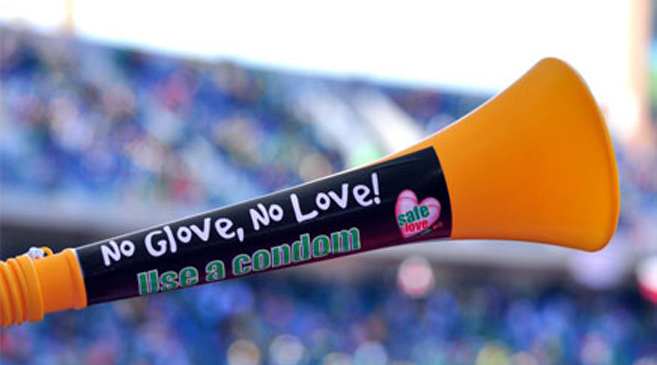
The focus of this Communications Support for Health (CSH) presentation for the International SBCC Summit 2016, Addis Ababa, Ethiopia, February 8-10, describes a national social and behaviour change communitation (SBCC) HIV campaign called Safe Love in Zambia.
From the abstract:
"From 2010 to 2014, the USAID and PEPFAR-funded Communications Support for Health (CSH) project implemented a national SBCC campaign called Safe Love. The campaign was based on formative research that revealed low self-efficacy for women in negotiating condom use and a low perception of the risk and realities of multiple concurrent partnerships. HIV in Zambia is spreading fastest among married couples, but issues of trust and fear of partner reprisal facilitate implicit acceptance of multiple concurrent partnerships (MCPs). Research also revealed that the context of HIV is extremely different in urban versus rural areas. In order to address these complexities, the Safe Love campaign included a strategic mix of channels, including mass media, social media, and interpersonal communication. In 2014, an outcome evaluation was conducted to assess the effects of the campaign on intermediate outcomes and four key behaviors: condom use, HIV testing, MCPs, and voluntary medical male circumcision (VMMC). Particular attention was paid to determining if results differed by area of residence, sex, and level of exposure/interaction with the campaign.
Key Highlights:
The campaign positively affected four different condom-use behaviors among males and females, but only in urban areas. Consistent condom use in the six months previous to the study increased by 8 percent among urban respondents who were able to recall any part of the campaign, and by 13 percent among those with higher levels of recall. The campaign also significantly influenced HIV testing, with a 22.5 percent increase in partners getting tested in the previous six months among those who had the highest level of recall. Campaign effects on VMMC were inconclusive; however, there was a strong effect on uncircumcised males’ intention to get circumcised in the subsequent six months."
International SBCC Summit 2016 website, February 22 2016 and March 3 2016.
- Log in to post comments