










































Paani Lekar Aana: Talking about menstruation and menstrual management
Summary:
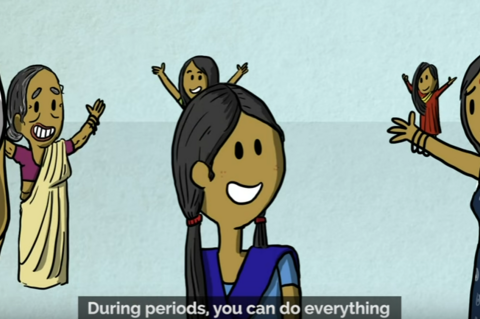
India has a population of approx. 120 million adolescent girls. This is the phase of puberty. Menstruation is a critical part of this. Colloquially, in India menstruation is referred to as woh din, mahina, masik dharm etc. resulting in increased restrictions and discriminatory practices. The NFHS-4 data from Bihar shows only 1.5% girls have sought the services of the Adolescent Friendly Health Clinics, one of the barriers being socio-cultural factors. Breakthrough's Adolescent Empowerment Programme, 2012 includes education, SRHR, and life-skills. We reach 420,000 adolescents between 11 to 18 years in Bihar, Jharkhand, Haryana, Delhi and Uttar Pradesh. The programme focuses on agency-building at schools :Taron Ki Toli (Legion of Stars) and community :Roshan Tara (Bright Stars), to develop their skills to address social norms and gender based discrimination including practices during menstruation. Often, the adolescent girls have shared that they feel shame, dirty, and disgusted about their bodies during menstruation. These are an indicator of the critical need to talk about menstruation, to break the silence, and dispel the myths. Breakthrough believes that these adolescents are critical social change actors who can create an agenda of urgency among their schools, homes and communities to challenge the existing myths and perceptions surrounding menstruation, and transform these to create an equitable and inclusive environment which is not discriminatory or violent towards girls and women. To address these issues regarding menstruation Breakthrough created an animated film of 8 minutes called Pani Lekar Aaana (Fetch me some water!).
Background/Objectives:
The film is in Hindi and meant to engage in a discussion, provide information, and identify ways to prevent discrimination because of menstruation. There are several campaigns on social media including Lahu Ka Lagaan, films like Period. End of Sentence', and Padman' that there is a discomfort, shame and lack of information on menstruation. Our experiences while growing-up, and interactions with the adolescents have reinforced these messages. This film aims to bridge the gap in information, and dispel some of the myths, and address the shame and taboo in the communities across Delhi, Jharkhand, Bihar, Haryana, and Uttar Pradesh.
Results/Lessons Learned:
The baseline data from our project in Bihar and Jharkhand showed that 60% of the adolescent girls (11-14 years old) talked to their mothers, 20% to cousins, and 10% to friends for information. The in-depth interviews revealed most conversations were in hushed tones, and fear-based messages, including conversations about problems' that may during this time. 19% of the girls said that they had problems during their periods and roughly 1/3 of them sought help for it. Thus, the film was created using Human Centred Design with adolescents (11-18 years) in rural and peri-urban areas. The characterization, story line and content were vetted through FGDs with these 3 groups in Gaya, Delhi, and Uttar Pradesh. The participants highlighted the need for non-judgemental information about puberty, and menstruation. Therefore, the film also addresses men and young boys about the relevance to have correct and complete information.
Discussion/Implications for the Field:
The tool is being used as a training tool and the use of humour helps to dissipate the discomfort on the issue of puberty and menstruation. Having a character that was seen as relatable :Jholewali Didi not perceived as strict or serious also translated to viewing the facilitator as approachable. Keeping the language and visuals simple and contextual keeps it clutter-free with the focus on the information in a fun and light-hearted manner. These factors ease the viewers to the topic and help to have discussions with an increased amount of comfort from when they started.
Abstract submitted by:
Pauline Gomes - Breakthrough TV
India has a population of approx. 120 million adolescent girls. This is the phase of puberty. Menstruation is a critical part of this. Colloquially, in India menstruation is referred to as woh din, mahina, masik dharm etc. resulting in increased restrictions and discriminatory practices. The NFHS-4 data from Bihar shows only 1.5% girls have sought the services of the Adolescent Friendly Health Clinics, one of the barriers being socio-cultural factors. Breakthrough's Adolescent Empowerment Programme, 2012 includes education, SRHR, and life-skills. We reach 420,000 adolescents between 11 to 18 years in Bihar, Jharkhand, Haryana, Delhi and Uttar Pradesh. The programme focuses on agency-building at schools :Taron Ki Toli (Legion of Stars) and community :Roshan Tara (Bright Stars), to develop their skills to address social norms and gender based discrimination including practices during menstruation. Often, the adolescent girls have shared that they feel shame, dirty, and disgusted about their bodies during menstruation. These are an indicator of the critical need to talk about menstruation, to break the silence, and dispel the myths. Breakthrough believes that these adolescents are critical social change actors who can create an agenda of urgency among their schools, homes and communities to challenge the existing myths and perceptions surrounding menstruation, and transform these to create an equitable and inclusive environment which is not discriminatory or violent towards girls and women. To address these issues regarding menstruation Breakthrough created an animated film of 8 minutes called Pani Lekar Aaana (Fetch me some water!).
Background/Objectives:
The film is in Hindi and meant to engage in a discussion, provide information, and identify ways to prevent discrimination because of menstruation. There are several campaigns on social media including Lahu Ka Lagaan, films like Period. End of Sentence', and Padman' that there is a discomfort, shame and lack of information on menstruation. Our experiences while growing-up, and interactions with the adolescents have reinforced these messages. This film aims to bridge the gap in information, and dispel some of the myths, and address the shame and taboo in the communities across Delhi, Jharkhand, Bihar, Haryana, and Uttar Pradesh.
Results/Lessons Learned:
The baseline data from our project in Bihar and Jharkhand showed that 60% of the adolescent girls (11-14 years old) talked to their mothers, 20% to cousins, and 10% to friends for information. The in-depth interviews revealed most conversations were in hushed tones, and fear-based messages, including conversations about problems' that may during this time. 19% of the girls said that they had problems during their periods and roughly 1/3 of them sought help for it. Thus, the film was created using Human Centred Design with adolescents (11-18 years) in rural and peri-urban areas. The characterization, story line and content were vetted through FGDs with these 3 groups in Gaya, Delhi, and Uttar Pradesh. The participants highlighted the need for non-judgemental information about puberty, and menstruation. Therefore, the film also addresses men and young boys about the relevance to have correct and complete information.
Discussion/Implications for the Field:
The tool is being used as a training tool and the use of humour helps to dissipate the discomfort on the issue of puberty and menstruation. Having a character that was seen as relatable :Jholewali Didi not perceived as strict or serious also translated to viewing the facilitator as approachable. Keeping the language and visuals simple and contextual keeps it clutter-free with the focus on the information in a fun and light-hearted manner. These factors ease the viewers to the topic and help to have discussions with an increased amount of comfort from when they started.
Abstract submitted by:
Pauline Gomes - Breakthrough TV
Source
Approved abstract for the postponed 2020 SBCC Summit in Marrakech, Morocco. Provided by the International Steering Committee for the Summit. Image credit: Breakthrough TV via YouTube