











































Connecting the dots between Social and Behavioural Change Communication Capacity and Institutional Systems: A case study of the South African Department of Health
Summary:
Background: SBCC capacity is critical if we are to address social determinants of health and effectively contribute to the sustainable development goals. SBCC capacity mapping initiatives are essential to identify gaps to guide capacity strengthening and inform resource allocation. In low-and-middle-income countries, there is limited evidence on SBCC capacity, despite donor investments. We assessed institutional capacity to implement SBCC in the South African Department of Health (DoH). Methods: A case study approach using mixed methods drew on data collected using a participatory SBCC capacity assessment tool. We held five one-day workshops with DoH staff (n=28). Participants completed self-assessments of collective capacity across three areas: technical, coordinating and systems using a four-point Likert scale. Group-discussions that provided rationale and evidence for scores were audio-recorded. SBCC capacity scores were analyzed and presented as means with standard deviations. Thematic content analysis was conducted using deductive and inductive codes. Results: At all levels, groups revealed that capacity to develop long-term, sustainable SBCC interventions was limited. We found limited collaboration between national and provincial programme levels. There was limited monitoring of SBCC indicators in the health information system. Coordination of SBCC efforts across different sectors was largely absent. Lack of capacity in budgeting emerged as a major challenge, with few resources available to conduct SBCC at any level. Overall, the capacity mean score was 2.08 (SD=0.83). Implications: Capacity assessments can facilitate planning for strengthening SBCC capacity in order to build and enhance health systems.
Background/Objectives:
SBCC capacity of staff and institutions is critical for health-promoting programmes to address social determinants of health and effectively contribute to disease prevention. Capacity of staff, as well as the institutions responsible for SBCC, is critical if potential is to be reached. Capacity mapping initiatives are the first step to identify gaps to guide capacity strengthening and inform resource allocation. In low-and-middle-income countries, like South Africa there is limited evidence on SBCC capacity. The purpose of this study was to assess collective and institutional capacity in SBCC to see its potential in contributing to sustainable develBopment.
Description of Intervention and/or Methods/Design:
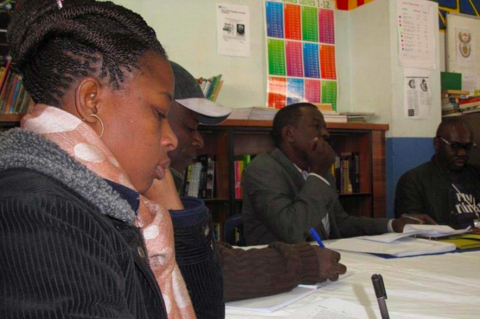
We used a case study design to assess organizational SBCC capacity at three levels of the South African DoH (national, provincial and district), using a concurrent mixed methods approach. Participatory SBCC capacity assessment tools were used to collect qualitative and quantitative data, through extended one-day workshops with extensive group-discussions with teams of DoH staff working across five study sites representing levels of the health system. DoH SBCC staff self-assessed their collective institutional capacity to implement SBCC using a four-point Likert scale (1-4) in three main areas: technical SBCC capacity, ability to effectively coordinate and implement SBCC activities, and state of institutional systems to support SBCC work. Group-discussions that provided rationale and evidence for scores provided were audio-recorded. SBCC capacity scores were analyzed and presented as means with standard deviations. Thematic content analysis of verbatim discussion transcripts was conducted using deductive and inductive codes.
Results/Lessons Learned:
SBCC capacity gaps existed across all three levels of the DoH and domains assessed. There was lack of regular contact between national and the provincial-level directorates resulting in limited monitoring of activities and SBCC outcomes being collated centrally to inform strategic planning. This was further impeded by the lack of SBCC-specific indicators reported on the health information system, and failure to integrate and use what could be borrowed from other programmes. SBCC staff, particularly at the district level, were aware of some local health needs, based on clinic-facility performance and statistics. These sometimes contradicted with the national strategic plan. Lack of external and internal coordination among national SBCC staff was evident. Institutional barriers, such as SBCC budget re-direction emerged as major challenges to planning capacity, with participants reporting few resources to conduct SBCC activities at any level. Such institutional constraints further reduce SBCC capacity within DOH.
Discussion/Implications for the Field:
Findings from this study suggest a need to look at the whole system rather than focusing on particular levels in the health system or on particular capacities if we are to effectively close capacity gaps needed to promote health, and address determinants. Intersectoral and intra-sectoral action (within DoH, other sectors and NGOs), is required to build Health in All Policies and create sustainable health-promoting systems. Managers and policy-makers need to address SBCC capacity development initiatives, training and recruitment among the designated SBCC workforce to meet health system strengthening goals and realize SBCC governance, policy and strategic plans.
Abstract submitted by:
Teurai Rwafa - University of the Witwatersrand
Nicola Christofides - University of the Witwatersrand
John Eyles - McMaster University
Jane Goudge - University of the Witwatersrand
Approved abstract for the postponed 2020 SBCC Summit in Marrakech, Morocco. Provided by the International Steering Committee for the Summit. Image credit: Wits School of Public Health.