










































Stakeholders Connecting the Dots!: Using Human Centered Design to Improve Second Year of Life Vaccination Among Urban Poor Communities in Ghana
Summary:
Life course vaccination, which refers broadly to immunizations given after the first year of life, is a major strategic direction in global immunization. It represents a departure from the traditional norm of completing the vaccination schedule within the child's first twelve months. Experience across many countries indicates that the creation of robust platforms for second year of life (2YL) vaccination poses substantial challenges, both for providing these services and increasing demand and utilization of them. In Ghana, as part of a broader program to improve 2YL vaccination, two-day workshops were held in three districts where there are large numbers of unvaccinated children. These workshops contrasted with typical immunization approaches by deliberately not using an instructional approach led by health personnel. Instead, human-centered design (HCD) methods were used to actively learn the perspectives of three participant groups, namely caregivers, health personnel, and local community influencers, on the barriers and enablers to 2YL vaccination they face and ideate solutions to prototype and test. Facilitated by experienced HCD practitioners and immunization technical experts, this process generated learning that was consistent with findings from previous formative research but extended it by empowering the three participant groups to jointly identify specific innovative actions. A second phase of work is now under way to rapidly introduce and test these actions. This workshop design, which was feasible and produced new insights and practical solutions, may be useful in other settings facing slow progress with 2YL vaccination and could be adapted to advance other health interventions.
Background/Objectives:
Life course vaccination is emerging as a major strategic direction in global immunization. As a departure from the traditional norm of completing the vaccination schedule by one year of age, many countries face substantial challenges to achieving high coverage for vaccination in the second year of life (2YL) and beyond, with obstacles encountered in service delivery and demand creation. Innovative approaches are needed to create a shared social norm among caregivers, families, communities, and health personnel and to design practical, context-appropriate actions that harness the resources of both communities and the health system to address the barriers.
Description of Intervention and/or Methods/Design:
In 2016, the Ghana Health Services in partnership with U.S. Centers for Disease Control initiated a program to support 2YL vaccination with demand creation as one component. In 2019, CDC partnered with John Snow, Inc. (JSI) and Unicef to organize workshops in three districts. Human-centered design methods were employed to elicit the perspectives of key participant groups on the obstacles and enabling factors they face in their journeys to 2YL vaccination and ideate activities to improve demand and utilization. A key innovation was that the workshops convened a small number of participants representing three groups: caregivers (mothers); health workers and volunteers; and local influencers (assemblyman, queen mother, school head, religious leader). Each group first created a unique persona, defined its own 2YL journey, and proposed strategies and actions. They then prioritized actions and recombined into mixed groups to jointly plan steps for implementation.
Results/Lessons Learned:
Across the three workshops, proposed interventions clustered around five areas: strengthening links with schools; increasing male involvement in 2YL vaccination; increasing support from local influencers; improving service convenience by extending hours and locations of vaccination services, and improving reminder systems for 2YL vaccination. These met the criteria of being important, feasible, scalable, and easy to implement. While the workshop outcomes were consistent with previous formative research on 2YL in Ghana, the participant-centered design, in contrast to a typical training, yielded granularity for proposed actions that create a shared sense of purpose and strengthen coordination within and beyond the health sector. Some actions were taken on the spot: a WhatsApp group comprised of local influencers and health personnel to coordinate community outreach on 2YL vaccination was established and continued to function without external support to engage communities on why, when, and where they should seek 2YL vaccination.
Discussion/Implications for the Field:
Workshops employing human centered design methods that brought together three diverse participant groups generated ideas that reflect a shared understanding of needs as well as suggested actions that extend beyond previous approaches to improving 2YL vaccination. The active engagement and commitment of local influencers elevated the interest and enthusiasm of the other two participant groups by signaling the importance of the subject matter. Workshop facilitation required both experienced practitioners of human centered design and experts in immunization to ensure technical soundness. A second phase of activity is now under way to prototype and test interventions proposed during the workshops.
Abstract submitted by:
Henry Nagai - John Snow, Inc. (JSI)
Rebecca Fields - JSI
Elisabeth Wilhelm - United States Centers for Disease Control and Prevention (CDC)
Imran Mirza - United Nations Children’s Fund (UNICEF)
George Bonsu - Ghana Health Service
Melissa Wardle - CDC
Joseph Opare - Ghana Health Service
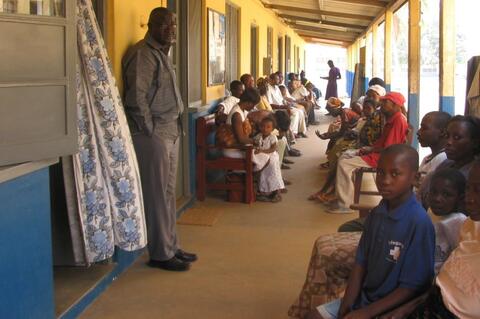
Approved abstract for the postponed 2020 SBCC Summit in Marrakech, Morocco. Provided by the International Steering Committee for the Summit. Image credit: John Snow, Inc.