










































The Making of India's Largest Urban Sanitation Behaviour Change Program
Summary:
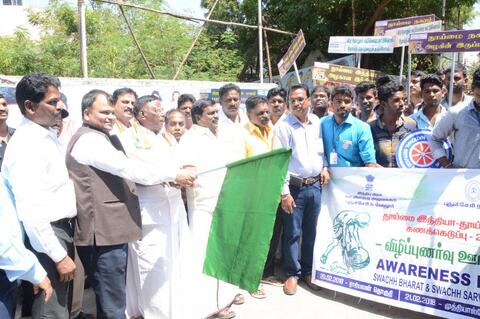
Swachh Bharat Mission-Urban (SBM-U), launched in 2014 by India, in a span of five years, has become probably the largest urban behaviour change program in the world. Through the personal leadership and involvement of the Prime Minister himself, SBM has been able to put the sanitation discourse on to the centre stage and transform a government mandate into a Jan Andolan', a people's movement. Massive mass media campaign, intensive outreach programs, stringent monitoring of Information, Education and Communication (IEC) fund spend, multiple stakeholder involvement have been some of the pillars of its SBCC strategy. However, the major trigger for behaviour change has been the ownership that people from the community have taken when it comes to leading and sustaining change on the ground. The results are here for the world to see- urban India, with its population of 377 million, has shunned open defecation made possible through the twin strategy of building adequate sanitation infrastructure and getting people to make use of them. The focus on SBCC has also helped the country to meet its SDG 6.2 targets on achieve access to adequate and equitable sanitation and hygiene for all and end open defecation :a task that seemed near impossible even till 2015 for India. The oft used adage Old habits die hard may not always hold true as the massive behaviour change heralded by SBM-U rightly points out.
Background/Objectives:
Close to eight million households in urban India defecated in the open in 2011. Weak sanitation has significant health costs and untreated sewage/septage from cities is the single biggest source of water pollution in India. It was to address these critical concerns that SBM was launched in October 2014 with the objective of making India open defecation free. Prevalent practices are not only a result of the lack of infrastructure, but also due to lack of awareness of sanitation linkage to health, or simply out of habit. The need was to bring about sustainable behavioural change on healthy sanitation practices.
Description of the Big Idea/Experience/Innovation and Its Importance to the SBCC Field:
Through a multi-dimensional communication approach, SBM-U has become the largest behavioural change campaign of its kind in the world. It developed an integrated 360-degree pan India communication strategy. Through a mix of traditional, digital and social media and intensive interpersonal communication, SBM-U has been able to activate stakeholders across the socio-economic spectrum ranging from community volunteers, school students, celebrities, elected representatives, media and the private sector. The biggest learning was from implementing these interventions at an unprecedented scale, covering >400 cities/towns with a population of >400 million in total. An analysis of performance of states has also pointed out that the best performing states under SBM are the ones that have utilized their IEC and BCC funds. In other words, effective IEC and BCC interventions have separated the leaders from the laggards. Today, SBM-U has taken the shape of the world's largest behaviour change campaign in sanitation and has been able to significantly accelerate India's progress in achieving SDG 6 in ensuring availability and sustainable management of water and sanitation for all.
Discussion/Implications for the Field:
The key implications that emerge from this program may be summarized as under:
Abstract submitted by:
Abhinav Akhilesh - KPMG
Sreejita Basu - KPMG
Swachh Bharat Mission-Urban (SBM-U), launched in 2014 by India, in a span of five years, has become probably the largest urban behaviour change program in the world. Through the personal leadership and involvement of the Prime Minister himself, SBM has been able to put the sanitation discourse on to the centre stage and transform a government mandate into a Jan Andolan', a people's movement. Massive mass media campaign, intensive outreach programs, stringent monitoring of Information, Education and Communication (IEC) fund spend, multiple stakeholder involvement have been some of the pillars of its SBCC strategy. However, the major trigger for behaviour change has been the ownership that people from the community have taken when it comes to leading and sustaining change on the ground. The results are here for the world to see- urban India, with its population of 377 million, has shunned open defecation made possible through the twin strategy of building adequate sanitation infrastructure and getting people to make use of them. The focus on SBCC has also helped the country to meet its SDG 6.2 targets on achieve access to adequate and equitable sanitation and hygiene for all and end open defecation :a task that seemed near impossible even till 2015 for India. The oft used adage Old habits die hard may not always hold true as the massive behaviour change heralded by SBM-U rightly points out.
Background/Objectives:
Close to eight million households in urban India defecated in the open in 2011. Weak sanitation has significant health costs and untreated sewage/septage from cities is the single biggest source of water pollution in India. It was to address these critical concerns that SBM was launched in October 2014 with the objective of making India open defecation free. Prevalent practices are not only a result of the lack of infrastructure, but also due to lack of awareness of sanitation linkage to health, or simply out of habit. The need was to bring about sustainable behavioural change on healthy sanitation practices.
Description of the Big Idea/Experience/Innovation and Its Importance to the SBCC Field:
Through a multi-dimensional communication approach, SBM-U has become the largest behavioural change campaign of its kind in the world. It developed an integrated 360-degree pan India communication strategy. Through a mix of traditional, digital and social media and intensive interpersonal communication, SBM-U has been able to activate stakeholders across the socio-economic spectrum ranging from community volunteers, school students, celebrities, elected representatives, media and the private sector. The biggest learning was from implementing these interventions at an unprecedented scale, covering >400 cities/towns with a population of >400 million in total. An analysis of performance of states has also pointed out that the best performing states under SBM are the ones that have utilized their IEC and BCC funds. In other words, effective IEC and BCC interventions have separated the leaders from the laggards. Today, SBM-U has taken the shape of the world's largest behaviour change campaign in sanitation and has been able to significantly accelerate India's progress in achieving SDG 6 in ensuring availability and sustainable management of water and sanitation for all.
Discussion/Implications for the Field:
The key implications that emerge from this program may be summarized as under:
- Imperatives for implementing SBCC programs at a massive scale Convergence with other government programs is key to impactful SBCC BCC, social mobilization and advocacy with influencers.
- Community ownership and creation of leaders from within is key to transforming a government mandate into a people's movement.
- Centrality of the inclusive communication approach.
Abstract submitted by:
Abhinav Akhilesh - KPMG
Sreejita Basu - KPMG
Source
Approved abstract for the postponed 2020 SBCC Summit in Marrakech, Morocco. Provided by the International Steering Committee for the Summit. Image credit: SBM-U via Twitter