










































Use of COEL Bangle to Disseminate Health and Nutritional Messages to Pregnant Women and Mothers of Children Under 2 Years in Bangladesh
Summary:
eHealth service is a fast growing concept to achieve Sustainable Development Goals by 2030. Bangladesh Government and development partners have been implementing mHealth program. During piloting of eHealth programs, it was identified that direct interaction and real time information dissemination is crucial to change mothers' behavior. Considering the facts, in 2015, Grameen Intel developed COEL, a smart wellness wearable Bangle that provides prerecorded mobile messages to pregnant and lactating mothers, on a preferred time and understandable way. From trial data, it was found that, most of the rural mothers have a requirement of information either for nutritional facts or status of the unborn child or health & hygiene or preparation in the final stage and COEL can deliver the information to the target audience rightly. It can also alert the presence and level of indoor air pollution particularly carbon monoxide. COEL is targeted to rural and periurban mother who usually doesn't get adequate health care services and information during pregnancy. Currently we have been disseminating about 80 wellness messages to pregnant women and mothers of children under 2 years via text messages and voice calls through Nobo Jatra project. COEL confirms the dissemination of messages to target audience, as the Bangle speaks in local language. Mothers can use this Bangle while engaging in every day to day household activity. Data regarding messages delivery and CO detection stored in the Bangle and while connected, it automatically transferred to cloud server, from where data management and monitoring can be done.
Background/Objectives:
In Bangladesh, only 47% pregnant women received 4 antenatal care (ANC). However, only 18% pregnant women receive quality ANC 4 from medically trained provider (MTP). About half (52%) of mothers receive postnatal care (PNC) by MTP within 2days of delivery. WHO estimated about 3.5 million births take place in Bangladesh annually. The current maternal mortality ratio is 176/100,000 live births. On the other hand, appropriate IYCF practices among children age 6-23 months is only 34% and exclusive breastfeeding 65%. Lack of information, cultural barriers, social taboos and traditions prevent women from accessing maternal and newborn health care services.
Description of Intervention and/or Methods/Design:
COEL delivers the information of nutritional facts or status of the unborn child or health & hygiene or preparation in the final stage to the target audience. During first registration of pregnant mother, messaging and alert time is customized based on expected date of delivery. It speaks 2 messages weekly: Monday and Thursday, at mother's preferred time. It also alerts the presence and level of indoor air pollution particularly carbon monoxide during cooking. COEL ensures that the target audience will not miss any disseminated information or messages, as the Bangle speaks in local language and mother can listen 2nd time the missing message by clicking a button. Pregnant women can use Bangle while engaging in every day to day household activity. Data regarding messages delivery and CO detection stored in the Bangle and while connected, it automatically transferred to cloud server, from where data management and monitoring can be done.
Results/Lessons Learned:
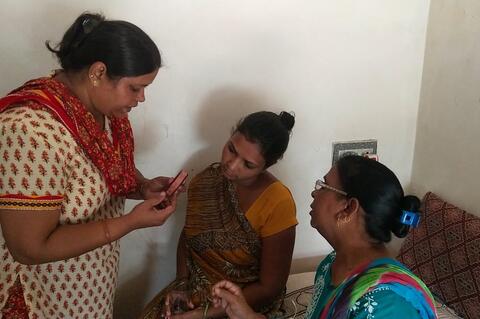
Through the project, approximately 2000 Pregnant and Lactating Mothers were identified and registered for providing them wellness messages by COEL Bangle during their whole period of pregnancy and after then up to 2 years of their children age. Mother were excited to receive wellness messages. It advises and encourages mother to take iron, folic acid, calcium supplements, nutritious diet, animal diet green leafy vegetables, fruits, enough rest, physical changes and danger signs of pregnancy. Its main aim is to ensure at least four antenatal care visit of every pregnant mother. Mother listens the received message with other family members together including her husband. Mothers become very happy and self confident to take decision regarding their health and care. COEL increases the health seeking behavior among the pregnant and lactating mother.
Discussion/Implications for the Field:
The project evaluation data showed that antenatal care visit was dramatically increased in comparison to baseline data in the project area. It also enhances the facility delivery. Mothers can take decision about their health during pregnancy by their own, which proved that COEL plays an important role in empowering rural women through community engagement. It underlines the need of scaling up the usage of COEL throughout the country as an national program.
Abstract submitted by:
Md. Abdul Alim
Approved abstract for the postponed 2020 SBCC Summit in Marrakech, Morocco. Provided by the International Steering Committee for the Summit. Image credit: Technology for Social Impact