










































Creating a powerful ecosystem for better maternal health in Nigeria: The #GivingBirthInNigeria Project
Summary
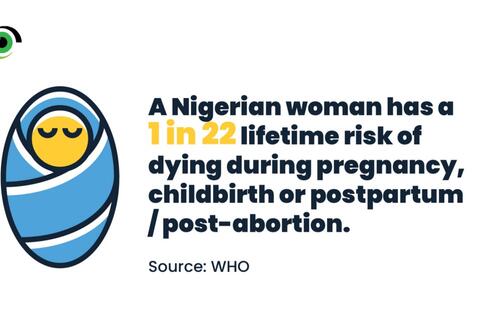
The Nigerian health sector has been faced with many challenges as a result of underfunding and the low priority it has been given under successive governments. This has translated into poor heath indices and health outcomes of Nigerians. The National Demographic Survey report estimates pregnancy maternal mortality ratio to be 576 and 556 deaths per 100,000 live births in 2013 and 2018 respectively. Not enough progress has been made in reducing the number of women that die in childbirth. The country's National Health Accounts shows a significant increase of total health investment from N1.9 trillion in 2010 to N3.9 trillion in 2016, implying that health outcomes have not comoved with investments. This suggests there is a disconnect across different stakeholders in the delivery of health interventions, especially at the community level. Efforts geared towards strengthening health systems and improving health outcomes requires a coordinated collaboration and support from all stakeholder groups including government, donor partners, private institutions, academia, civil society organisations, and local communities. There is need for the government and other donors to understand the linkages and strengths across other health stakeholders in program design and implementation. A consortium of Nigeria Health Watch, EpiAFRIC and Africare is implementing a project, #GivingBirthInNigeria with support from MSD for Mothers. The project demonstrates collaboration among donor partner, non-governmental organizations, and private institutions, incorporating the community's voice in maternal death reporting and surveillance efforts. This is achieved leveraging on community-based organisations, with a view towards making all maternal deaths count.
Background/Objectives
Our proposal seeks to showcase the linkages between donor partners and other stakeholders in the delivery of high impact health interventions at the community level. This is intended to refocus the attention of government, development partners, donor agencies and other stakeholder groups to engage the community and incorporate them at the heart of the intervention design through to implementation.
Results/Lessons Learned
The #GivingBirthInNigeria project uses a cloud-based data collection platform to collect data on maternal deaths and its causes in various communities as evidence for advocacy. The data generated through the platform has stimulated discussions among health workers, community members and policy makers about why women die at childbirth. These discussions at the community level have translated to an increase in awareness of prevailing maternal death causes in the community. In addition, there have been increased reporting of maternal deaths and increased use of maternal death data for behaviour change communication within the community setting. Conversations are highlighting the fact pregnancy-related deaths are abnormal and can be actively prevented by specific changes in behaviour, increased ownership in communities of maternal outcomes, and the need for traditional birth attendants to focus on encouraging and supporting facility deliveries by knowing when to refer at risk clients rather than taking deliveries themselves.
Discussion/Implications For The Field
Beyond #GivingBirthInNigeria, Nigeria Health Watch supports government and other partners in formulating positive and effective health policies, and holding duty bearers accountable for delivering affordable and quality healthcare to Nigerians. Nigeria Health Watch has built a community for its advocacy work on different platforms; 37,300 Twitter followers, 51,000 Facebook followers, 3,000 Instagram followers, 527 subscribers on YouTube and over 1,000,000 social media impressions a month. Nigeria Health Watch facilitates policy dialogues, health watch forums and its' Flagship Future of Health Conference reaching a wide audience of health practitioners, civil society organizations and individuals who influence health policy decisions in Nigeria.
Abstract submitted by:
Olubunmi Oyebanji - Nigeria Health Watch
Aloysius Ugwu - Nigeria Health Watch
Betty Baiye - Nigeria Health Watch
Approved abstract for the postponed 2020 SBCC Summit in Marrakech, Morocco. Provided by the International Steering Committee for the Summit. Image credit: Nigeria Health Watch