










































Project Child - child mental health animation
Summary:
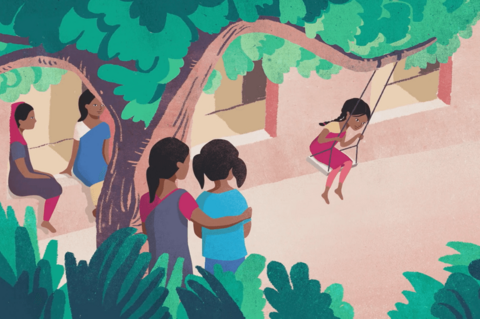
Medical Aid Films is partnering with the Kailash Satyarthi Children's Foundation - a Nobel Prize-winning global leader in advocacy work on child labour and human trafficking - to create four short animated films to feature as a key intervention in the rehabilitation of children rescued from circumstances of exploitation in India. This project will create four evidence-based educational animations to assist in the rehabilitation and recovery of children who have experienced recent trauma - including through forced labour, trafficking and other forms of exploitation. The animations are intended to serve as one element of a wider, multifaceted programme of rehabilitation and will be focused on helping children who have been rescued from very adverse circumstances, such as forced labour, trafficking and other forms of exploitation; many of whom will have been in these abhorrent circumstances from ages as young as 6 years. Two panels of experts will input into the design and production process and provide technical review to the in-development of these animations. These comprise, respectively, staff /counsellors at the Kailash Satyarthi Childrens Foundation and academics at Harvard University + Massachusetts General Hospital. This multi media presentation will showcase one of the animated films and provide explanation of the context. This submission directly addresses the 3 conference themes and the work will show the diversity and powerful impact of using animation in child mental health.
Background/Objectives:
Children rescued from these circumstances require immediate physical health support. But, too often, the mental damage is harder to identify and ameliorate. Research indicates that managing confusion and delivering comfort through the delivery of immediate positive human interaction, and imparting acceptance, affection, basic care, and education are crucial to having long-term successful outcomes. The objective is to create a series of practical and impactful animations that are easily comprehended and absorbed by young children, helping them to begin to cope with the traumatic experiences from which they are recovering.
Results/Lessons Learned:
The animations are intended to one aspect of a wider, multifaceted rehabilitation programme that will help to break negative cycles of victimisation and place child viewers onto a smoother path to recovery and long-term mental health. A plan will be developed by partners and supported by MAF's Head of Evaluation and Research to evaluate the effectiveness of the animated films using appropriate qualitative methods. In consultation with participating partners, a dissemination plan will also be developed. It has been noted that it will be important to include caregivers within the viewing and discussion of these films, as many will have had experiences of trauma similar to the target audience children. This will help prepare the caregivers to build relationships with the children based on resiliency.
Discussion/Implications for the Field:
Young children (ages 6-16) who have been recently rescued from forced labor, trafficking and other forms of exploitation, currently residing in KSCF-administered ashrams in Delhi and Rajasthan. Videos will be shown during their morning assembly routine. Videos can be seen several times with discussions in between. There are many implications for the wider field as to how animation can be used as part of a a wider, multifaceted rehabilitation programme that will help to break negative cycles of victimisation and place child viewers onto a smoother path to recovery and long-term mental health.
Abstract submitted by:
Catherine McCarthy - Medical Aid Films
Medical Aid Films is partnering with the Kailash Satyarthi Children's Foundation - a Nobel Prize-winning global leader in advocacy work on child labour and human trafficking - to create four short animated films to feature as a key intervention in the rehabilitation of children rescued from circumstances of exploitation in India. This project will create four evidence-based educational animations to assist in the rehabilitation and recovery of children who have experienced recent trauma - including through forced labour, trafficking and other forms of exploitation. The animations are intended to serve as one element of a wider, multifaceted programme of rehabilitation and will be focused on helping children who have been rescued from very adverse circumstances, such as forced labour, trafficking and other forms of exploitation; many of whom will have been in these abhorrent circumstances from ages as young as 6 years. Two panels of experts will input into the design and production process and provide technical review to the in-development of these animations. These comprise, respectively, staff /counsellors at the Kailash Satyarthi Childrens Foundation and academics at Harvard University + Massachusetts General Hospital. This multi media presentation will showcase one of the animated films and provide explanation of the context. This submission directly addresses the 3 conference themes and the work will show the diversity and powerful impact of using animation in child mental health.
Background/Objectives:
Children rescued from these circumstances require immediate physical health support. But, too often, the mental damage is harder to identify and ameliorate. Research indicates that managing confusion and delivering comfort through the delivery of immediate positive human interaction, and imparting acceptance, affection, basic care, and education are crucial to having long-term successful outcomes. The objective is to create a series of practical and impactful animations that are easily comprehended and absorbed by young children, helping them to begin to cope with the traumatic experiences from which they are recovering.
Results/Lessons Learned:
The animations are intended to one aspect of a wider, multifaceted rehabilitation programme that will help to break negative cycles of victimisation and place child viewers onto a smoother path to recovery and long-term mental health. A plan will be developed by partners and supported by MAF's Head of Evaluation and Research to evaluate the effectiveness of the animated films using appropriate qualitative methods. In consultation with participating partners, a dissemination plan will also be developed. It has been noted that it will be important to include caregivers within the viewing and discussion of these films, as many will have had experiences of trauma similar to the target audience children. This will help prepare the caregivers to build relationships with the children based on resiliency.
Discussion/Implications for the Field:
Young children (ages 6-16) who have been recently rescued from forced labor, trafficking and other forms of exploitation, currently residing in KSCF-administered ashrams in Delhi and Rajasthan. Videos will be shown during their morning assembly routine. Videos can be seen several times with discussions in between. There are many implications for the wider field as to how animation can be used as part of a a wider, multifaceted rehabilitation programme that will help to break negative cycles of victimisation and place child viewers onto a smoother path to recovery and long-term mental health.
Abstract submitted by:
Catherine McCarthy - Medical Aid Films
Source
Approved abstract for the postponed 2020 SBCC Summit in Marrakech, Morocco. Provided by the International Steering Committee for the Summit. Image credit: Medical Aid Films