










































Contextualizing Birth Preparedness Classes to increase ANC uptake and facility delivery in Somalia
Summary:
Somalia has some of the highest infant, child, and maternal mortality rates in the world. In 2015 the maternal mortality ratio was 732 per 1,000 live births. Women have a 1 in 18 lifetime risk of dying due to pregnancy and childbirth-related complications. Save the Children's 2016 State of the World's Mothers report ranked Somalia as the worst place in the world to be a mother. Where health services are provided free of charge, utilisation rates remain low, despite there being a significant number of demand creation and behaviour change activities taking place. To address this, PSI through a DFID-funded demand creation program, applied human centered design to better understand the persistent barriers to ANC and facility delivery. Which in this context include: low knowledge on pregnancy and childbirth, myths and misconceptions about modern health care, poor health service coverage and the skill of health care providers. In addressing some of these barriers, the Birth Preparedness Class intervention was developed. Through a co-creation process with pregnant women, borrowing from a traditional Somali practice known among the Somali women as Taraaraysi a ritual performed during the 7th to 9th month of the pregnancy where pregnant women organize a feast for poor women and children, and by that noble act, ask Allah for a safe delivery. It aimed to increase safe motherhood awareness among pregnant women, while advocating for ANC attendance and facility delivery through fun and informative sessions in a supportive, environment among their peers.
Background/Objectives:
Insights generated from immersive research conducted as part of the Human Centered Design process revealed that pregnancy and childbirth are the stages where Somali women are emotionally vulnerable and in need of comfort, emotional support, and empathy. Their vulnerability is made complex by the lack of knowledge on what to expect during pregnancy, the fear of complications, labour pain and the misconceptions that such pain and complications are better managed using local methods and in the comfort of their homes. The Birth Preparedness Class intervention was co-created as one of the desirable ways to promote healthy behaviour change among pregnant...
Description of Intervention and/or Methods/Design:
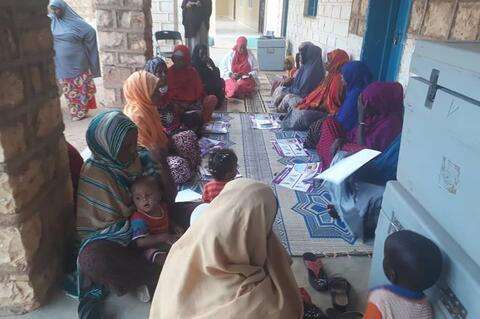
It is a series of two 1 hour weekly classes at the health facility facilitated by a midwife. The first-class targets 12-20 pregnant women in their 1st and 2nd trimester the second class targets those in their 3rd trimester . A curriculum adapted for the Somali context is applied to facilitate fun and participatory discussions. The classes cover 7 key topics on safe motherhood and involves tours of the delivery room for familiarization and demystify horrifying rumors they may have heard. Classes involve henna application, social support and empathy needed to complete the pregnancy journey safely as practised during Taraaraysi. (a ritual performed during the 7th to 9th month of the pregnancy where pregnant women organize a feast for poor women and children, and by that noble act, ask Allah for a safe delivery). Participants are recruited during visiting facility and during home visits by community champions.
Results/Lessons Learned:
In September 2019, 220 pregnant women in their first or second trimesters and 326 pregnant women in their 3rd trimester were educated and empowered through the birth preparedness classes. The classes provided these women with the opportunity to share their fears and experiences with their peers and have time to closely interact with the provider to clarify pregnancy and delivery related issues which is rare in a context where facility utilization for maternal health services is very low. The demand for the classes spiked after the initial mobilized classes, with the subsequent classes recording numbers beyond the prescribed maximum of 20. We are tracking these women to identify the 1st time users of health services and then ensure that they are supported to deliver at the facility, which is the key objective of the intervention. We should have the complete results by the time of the conference.
Discussion/Implications for the Field:
Interactive, fun activities in the education sessions are effective spontaneous ways of increasing knowledge and stimulating behaviour change among mothers in the Somali context. This intervention highlights the place of culture and tradition as emotional hooks and motivation in the behaviour change as seen by the application of the Taraaraysi concept. Emotional and psychological support can be effectively achieved through women support groups where they share experiences and empathize with each other. Women are comfortable sharing this journey with their peers and this support has been effective in the different cohorts completing ANC visits and delivering at a health facility.
Abstract submitted by:
Tom Ngaragari - PSI
Christopher Meraiyebu
Kipng'etich Mutai - PSI
Somalia has some of the highest infant, child, and maternal mortality rates in the world. In 2015 the maternal mortality ratio was 732 per 1,000 live births. Women have a 1 in 18 lifetime risk of dying due to pregnancy and childbirth-related complications. Save the Children's 2016 State of the World's Mothers report ranked Somalia as the worst place in the world to be a mother. Where health services are provided free of charge, utilisation rates remain low, despite there being a significant number of demand creation and behaviour change activities taking place. To address this, PSI through a DFID-funded demand creation program, applied human centered design to better understand the persistent barriers to ANC and facility delivery. Which in this context include: low knowledge on pregnancy and childbirth, myths and misconceptions about modern health care, poor health service coverage and the skill of health care providers. In addressing some of these barriers, the Birth Preparedness Class intervention was developed. Through a co-creation process with pregnant women, borrowing from a traditional Somali practice known among the Somali women as Taraaraysi a ritual performed during the 7th to 9th month of the pregnancy where pregnant women organize a feast for poor women and children, and by that noble act, ask Allah for a safe delivery. It aimed to increase safe motherhood awareness among pregnant women, while advocating for ANC attendance and facility delivery through fun and informative sessions in a supportive, environment among their peers.
Background/Objectives:
Insights generated from immersive research conducted as part of the Human Centered Design process revealed that pregnancy and childbirth are the stages where Somali women are emotionally vulnerable and in need of comfort, emotional support, and empathy. Their vulnerability is made complex by the lack of knowledge on what to expect during pregnancy, the fear of complications, labour pain and the misconceptions that such pain and complications are better managed using local methods and in the comfort of their homes. The Birth Preparedness Class intervention was co-created as one of the desirable ways to promote healthy behaviour change among pregnant...
Description of Intervention and/or Methods/Design:
It is a series of two 1 hour weekly classes at the health facility facilitated by a midwife. The first-class targets 12-20 pregnant women in their 1st and 2nd trimester the second class targets those in their 3rd trimester . A curriculum adapted for the Somali context is applied to facilitate fun and participatory discussions. The classes cover 7 key topics on safe motherhood and involves tours of the delivery room for familiarization and demystify horrifying rumors they may have heard. Classes involve henna application, social support and empathy needed to complete the pregnancy journey safely as practised during Taraaraysi. (a ritual performed during the 7th to 9th month of the pregnancy where pregnant women organize a feast for poor women and children, and by that noble act, ask Allah for a safe delivery). Participants are recruited during visiting facility and during home visits by community champions.
Results/Lessons Learned:
In September 2019, 220 pregnant women in their first or second trimesters and 326 pregnant women in their 3rd trimester were educated and empowered through the birth preparedness classes. The classes provided these women with the opportunity to share their fears and experiences with their peers and have time to closely interact with the provider to clarify pregnancy and delivery related issues which is rare in a context where facility utilization for maternal health services is very low. The demand for the classes spiked after the initial mobilized classes, with the subsequent classes recording numbers beyond the prescribed maximum of 20. We are tracking these women to identify the 1st time users of health services and then ensure that they are supported to deliver at the facility, which is the key objective of the intervention. We should have the complete results by the time of the conference.
Discussion/Implications for the Field:
Interactive, fun activities in the education sessions are effective spontaneous ways of increasing knowledge and stimulating behaviour change among mothers in the Somali context. This intervention highlights the place of culture and tradition as emotional hooks and motivation in the behaviour change as seen by the application of the Taraaraysi concept. Emotional and psychological support can be effectively achieved through women support groups where they share experiences and empathize with each other. Women are comfortable sharing this journey with their peers and this support has been effective in the different cohorts completing ANC visits and delivering at a health facility.
Abstract submitted by:
Tom Ngaragari - PSI
Christopher Meraiyebu
Kipng'etich Mutai - PSI
Source
Approved abstract for the postponed 2020 SBCC Summit in Marrakech, Morocco. Provided by the International Steering Committee for the Summit. Image credit: PSI Somalia/Somaliland via Facebook