











































Whole Site Orientation: Addressing Facility Related Barriers to Accessing FP Services and Intra-facility Referral for Family Planning Uptake in Kano, Nigeria.
Summary:
Background Addressing barriers to Family Planning (FP) services is paramount to increasing contraceptive uptake. Kano State located in northwestern part of Nigeria is culturally homogenous and very conservative Muslim environment with depressed CPR. Whole Site Orientation (WSO) is an innovative approach that targets clinical, non-clinical staffs and community providing correct information on FP to create advocates and to stimulate intra-facility and community referrals. It focuses on learning from the social and behaviour change perspective of solving health system problems. The main objectives of WSO are to engage staff in health facility to address myths and misconceptions on FP and intra-facility referrals. Methodology WSO was conducted on quarterly basis across selected health facilities in Kano state in 2018 and 2019. Some of the topics discussed include; myths & misconceptions about FP, side effects etc. The facility FP provider facilitates the sessions. Following two years of intervention, Key Informant Interview (KII) was conducted across the selected intervention sites. Results/Key findings About one thousand and fifty four (1,054) facility staff and community representatives participated. Intra-facility referrals for FP services from other units have been reported to improve markedly due to WSO. Similarly, increase in discuss on FP had also been reported by the facility staffs. Recognisable improvement in the knowledge of non-clinical workers on issues of FP was also reported, thus addressing FP myths and misconceptions among them. Conclusion WSO is an innovative approach used to address FP myths and misconceptions in conservative environments.
Background/Objectives
Addressing barriers to Family Planning (FP) services is paramount to increasing contraceptive uptake. Kano State located in northwestern part of Nigeria is culturally homogenous and very conservative Muslim environment with depressed CPR. Whole Site Orientation (WSO) is an innovative approach targets clinical, non-clinical staffs and community providing correct information on FP to create advocates and to stimulate intra-facility and community referrals. It focuses on learning from the social and behaviour change perspective of solving health system problems. The main objectives are to engage staff in health facility to address myths and misconceptions and intra-facility referrals.
Description Of Intervention And/or Methods/Design
WSO was conducted on quarterly basis across 38 selected high volume health facilities in 8 metropolitan Local Government Areas (LGAs) in the States in 2018 and 2019. These facilities were selected based on the following criteria namely; number of deliveries, immunisation, ANC attendance, number of FP users and Post Abortion Care (PAC) attendance recorded over the year (June 2016 to June 2017). WSO sessions were generally held in the afternoon when the patient/clients workload has reduced. Selected topics on FP are presented and discussed. Some of the topics include; brief overview on FP methods, benefits of FP, myths & misconceptions about FP, side effects of different FP methods among others. The facility FP provider facilitates the WSO with technical support from LGA Reproductive Health Coordinator. Following two years of intervention, Key Informant Interview (KII) was conducted across the selected intervention sites.
Results/Lessons Learned
About one thousand and fifty four (1,054) facility staff and community members participated in at least one session of WSO. Intra-facility referral for FP services from other units notably immunisation unit within the facility have been reported to improve markedly due to WSO. Similarly, increase in discuss on FP across the different facility units had also been reported by the facility staffs. Recognisable improvement in the knowledge of non-clinical workers on issues of FP was also reported, thus addressing most of the myths and misconceptions among facility staff. Based on the interviews with service providers from the WSO facilities, they observed substantial increases in the uptake of FP services post WSO sessions.
Discussion/Implications For The Field
Addressing barriers to FP services from perspective of focusing on myths and misconceptions especially related to religious inhibition is important in a conservative Muslim environment like Kano. Evidence had shown that about 12% of women of reproductive age are not using contraception because they believed that it is not allowed in their religion. WSO had shown to address myths and misconceptions in our locality by creating critical mass of FP champions and advocates from the health facilities and communities who have been making positive statements on FP.
Abstract submitted by:
Mukhtar Muhammad - National Assembly of Nigeria (NASS)
Lekan Ajijola - The Nigerian Urban Reproductive Health Initiative (NURHI)
Deborah Samaila Hassan - The Nigerian Urban Reproductive Health Initiative (NURHI)
Victor Igharo - The Nigerian Urban Reproductive Health Initiative (NURHI)
Kabir Abdullahi -
Mojisola Odeku - The Nigerian Urban Reproductive Health Initiative (NURHI)
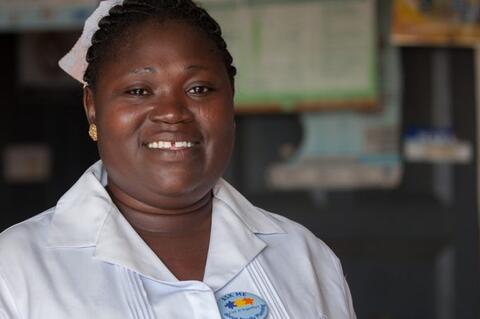
Approved abstract for the postponed 2020 SBCC Summit in Marrakech, Morocco. Provided by the International Steering Committee for the Summit. Image credit: The Nigerian Urban Reproductive Health Initiative (NURHI)