










































UNALA Mobile Application: Using Technology to Foster Enthusiasm and Make a Greater Impact on Adolescent Reproductive Health Among Young People
Summary:
Adolescents are often hard to reach and can face bullying and reproductive health related issues such as sexually transmitted infections, HIV, unwanted pregnancy, drugs, child marriage, and gender based violence. UNALA uses technology to encourage adolescents to change their health behaviors. Using this application, young people can select doctors and midwives without fear of stigma because they can choose which health service they want to use. To monitor the progress of the application, UNALA management conducts periodic evaluations, where UNALA invites young people to share their opinions about the application. UNALA will upgrade the application to increase benefits and make it easier to use.
Background/Objectives
In Indonesia, adolescents are often hard to reach and can face bullying and reproductive health related issues such as sexually transmitted infections, HIV, unwanted pregnancy, drugs, child marriage, and gender based violence. Indonesia has a population of 237.6 million of whom 27.6% are adolescents and young people between the ages of 15-24 years. For Yogyakarta, about 24.13% of the total population (3,513,071) are teenagers, which is the largest population composition. Because adolescents use technology throughout their lives, UNALA uses technology to encourage adolescents to change their health behaviors.
Description Of Intervention And/or Methods/Design
UNALA has established a network of private general practitioners and midwives who work closely with young people to provide high-quality and youth-friendly health services. UNALA also uses technological approaches such as the UNALA mobile application. The application contains a variety of information about UNALA activities, youth-related health facts, and the contacts of UNALA health services. Young people can download the application by using the play store. After downloading, they must sign up on the application with a username and password or by using Facebook. With an account, they can find the health service closest to them. To make an appointment, they must select the date and time, and the UNALA Mobile administrator will confirm the appointment with the intended health practitioner. Adolescents can use the application for other functions, including accessing interesting and accurate information about health topics
Results/Lessons Learned
The number of UNALA mobile app installations was about 662. On the application, adolescents can rate a health service after using it and see updates of UNALA activities. The application provides a list of doctors and midwives closest to the user's home or activities. One of the obstacles faced by the youth when going for treatment at an UNALA health service is being identified by people who know them and consequently feel embarrassment and shame. Using this application, young people can select doctors and midwives without fear of stigma because they can choose which health service they want to use. With the application, the youth can make an appointment one hour before the health service opens formally. All health practitioners received adequate training from UNALA already to give friendly reproductive health services so they can reduce potential judgment and stigma to make it more comfortable for young people.
Discussion/Implications For The Field
The application is managed by UNALA administrators to maintain a high quality of communication and information. The administrators will upgrade the application to increase benefits and make it easier to use. To monitor the progress of the application, UNALA management conducts periodic evaluations, where UNALA invites young people to share their opinions about the application. UNALA hopes the number of users will continue to rise, but to do so, the application will need to be promoted to young people, the government, the private sector, and stakeholders in time so it can be fully utilized.
Abstract submitted by:
Henri Puteranto - FHI360
Ciptasari Prabawanti - Siklus Indonesia
Putri Katulistiwa - Siklus Indonesia
Tantri Swastika - Siklus Indonesia
Riza Aritara - Siklus Indonesia
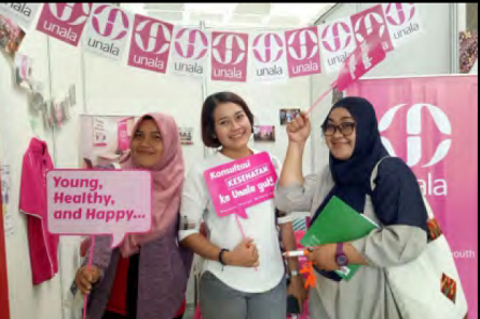
Approved abstract for the postponed 2020 SBCC Summit in Marrakech, Morocco. Provided by the International Steering Committee for the Summit. Image credit: Siklus Indonesia