










































From Innovation to Scale: Advancing the Sexual and Reproductive Health and Rights of Young People
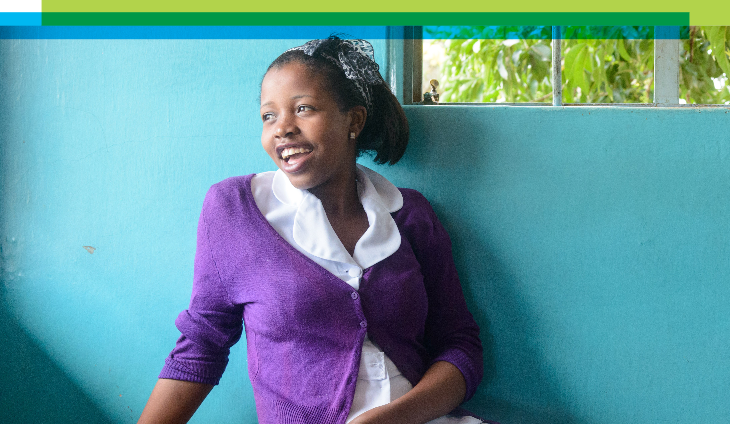
"Evidence shows that youth-friendly services work only if adolescents know their options and have the social and community support needed to feel comfortable seeking services."
This brief reviews 10 components of the approach Population Services International (PSI) recommends to reach young people (15-24 years old) regarding their sexual and reproductive health and rights (SRHR) and describes examples from actual programmes on the ground. The approaches described, which actively involve young people at many stages, focus on creating demand for and supply of high-quality products and services, as well as promoting enabling environments. The brief offers examples involving the public and private sectors and mixed public-private delivery systems.
The recommendations in the report stem from PSI's efforts to ensure that all sexually active young people, regardless of marital status or parity, have access to the widest available range of contraceptive options and that their access to services is embraced and advocated for by young people, their health providers, governments, families, and communities. PSI has also pledged to reach 10 million people under age 25 with modern contraceptive methods by the end of December 2020. To achieve these goals, PSI and its partners are testing new ways of collaborating with young people to reimagine and redefine the way SRHR programmes are designed, delivered, measured, and evaluated.
PSI acknowledges that although programmes are strongest when all 10 recommended components are used synergistically, funding and time constraints may limit the number of components used in a single programme or setting. As presented in the brief, the 10 components for successful youth programming are as follows:
1. Segmenting young populations, using data to:
- identify young people whom the health market is failing - e.g., those with unmet needs for contraceptives, and young women/girls with high rates of unwanted pregnancies and/or unsafe abortions;
- identify subgroups based on psychological and social variables such as attitudes, motivations, and lifestyle; and
- prioritise the underserved groups by applying an equity lens.
2. Understanding young people's world by having young people participate in data collection and interpretation with professionals, and by using participatory approaches such as photography, journaling, and games to explore factors that influence young people's decisions - The report indicates that these activities can also help to identify youth-accessible assets such as social support structures that can be leveraged and strengthened.
3.Designing programmes in partnership with youth - PSI engages young people in design laboratories, where they work with SRHR and design experts to generate ideas. PSI also begins with an ongoing process of testing the ideas with young people at very early stages to support identifying and refining those with the greatest potential for success.
4.Ensuring that providers and services are youth friendly by:
- ensuring that services are certified based on post-training supervision visits, client exit interviews, and feedback from young mystery clients;
- mainstreaming youth-related standards into PSI quality assurance standards and assessment systems; and
- training staff in more than 20 countries to provide everyone who interacts with clients – providers, receptionists, counsellors, and educators – with youth-friendly services training focused not only on young people's SRHR needs but also on personal values, health care ethics, and the skills needed to communicate with and build rapport and trust with young people.
5.Expanding contraceptive options inside and outside the clinic - The brief explains that PSI and its partners have worked at local and global levels to address issues of provider bias, misinformation, and other barriers that prevent young people from accessing certain contraceptive methods. For example, PSI initiated a technical consultation that led to a global consensus statement on long-acting reversible contraceptives (LARCs) and developed social and behaviour change communication materials and training for providers and youth to encourage youth-friendly contraceptive counselling and increase young people's access to a range of contraceptive choices.
6.Reaching out with SRHR education and service linkages - The brief offers as an example of PSI's Healthy Actions programme for out-of-school youth in Liberia that uses input from young people and a wide range of communications channels in multi-sectoral strategies that link education with services to increase informed and voluntary demand for contraceptives among young people.
7.Engaging youth through technology - According to the brief, where young people have access to cell phones and social media, PSI uses a variety of technology-supported approaches to share information, answer questions, stimulate discussion and an interest in SRHR, and monitor programmes.
8.Fostering supportive environments for positive youth development - PSI works to strengthen social norms that favour health and rights, starting with a focus on the key transition period of adolescence. It gives as an example a joint PSI and private sector effort to address gender inequality and male opposition to family planning in the Democratic Republic of the Congo by training young champions to lead young newlywed couples through dialogues on gender, power, and health.
9.Developing sustainable markets for affordable contraceptives - The report describes some of PSI's successes in developing sustainable markets for cost-recoverable condoms, emergency contraceptives, oral contraceptives, and other family planning products for those who can afford them, while continuing to distribute subsidised products to those who cannot.
10.Applying data to decision making - The brief explains that to improve their collection and use of sex- and age-disaggregated data, PSI's database draws from both District Health Information System 2 (DHIS2) and market research data and includes data on clients who access PSI products through kiosks, drug shops, pharmacies, and other outlets, as well as on clients under age 15.
The brief also presents a table that describes barriers to young people's contraceptive methods choice and suggests solutions for expanding their options.
PSI website on December 10 2017.
- Log in to post comments