










































Lessons Learned From Scale-Up of Voluntary Medical Male Circumcision Focusing on Adolescents: Benefits, Challenges, and Potential Opportunities for Linkages with Adolescent HIV, Sexual, and Reproductive Health Services
United States Agency for International Development (USAID) Washington/Global Health Bureau/Office of HIV/AIDS (Njeuhmeli, Seifert-Ahanda, Castor, Conly), Population Services International (Hatzold,) Johns Hopkins University Center for Communication Programs (Gold),Jhpiego-Tanzania (Mahler), Futures Institut (Kripke), Centre for Sexual Health & HIV/AIDS Research (CeSHHAR), Harare, Zimbabwe (Mavhu), Ministry of Health and Child Care, Harare, Zimbabwe (Ncube, Mugurungi), Ministry of Health and Social Welfare, Iringa Region, Tanzania (Koshuma), Integrated Delivery, Global Development Program, Bill & Melinda Gates Foundation (Sgaier), Department of Global Health, University of Washington (Sgaie), United Nations Children's Fund (UNICEF) (Kasedde)
"By December 2013, it was estimated that close to 6 million men had been circumcised in the 14 priority countries for scaling up voluntary medical male circumcision (VMMC), the majority being adolescents (10-19 years). This article discusses why efforts to scale up VMMC should prioritize adolescent men, drawing from new evidence and experiences at the international, country, and service delivery levels."
This study reviews the state of VMMC, especially as it serves adolescents in priority countries, with a particular focus on communication involved with VMMC in Zimbabwe. "Adolescents experience challenges in accessing and receiving health services because of policies that prevent them from independently seeking services without parental consent, judgmental provider attitudes about sexual activity among young people, and services that are not tailored to the needs of youth... At the international level, we examine the policy environment, international guidance, and current gaps for adolescent VMMC services and HIV prevention in general. At the country level, we assess VMMC program implementation and use selected programs to illustrate how the age-specific targets were met. Finally, at the service delivery level, we draw lessons from experiences in priority countries in reaching adolescents with VMMC services." [Footnotes are removed by the editor throughout.]
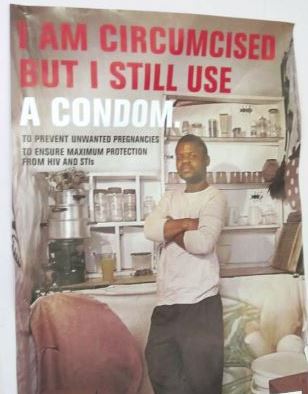
The review found that adolescents need more accessible VMMC, particularly youth-friendly health care, suggesting that "sustainable, effective youth programming should be age and context specific, have providers that show respect and understanding for adolescents' special needs, and link to other health services such as SRH [sexual and reproductive health]." In Zimbabwe, a reggae artist "developed several songs, radio jingles, and appeared on television, billboards, and print materials promoting the benefits of VMMC and promoting it as fashionable and leading to success; positioning VMMC as a lifestyle choice for smart men and boys aged 10–19 years." Circumcised clients were encouraged, as "VMMC champions", to participate in a “Bring a Buddy" campaign. Mobile outreach units near schools are positioned during service delivery and community mobilisation, combined with mass media campaigns before and during school breaks.
VMMC clients are routinely tested for HIV, and those testing HIV-positive receive post-test counseling that addresses psychosocial issues, disclosure support, and individual treatment and care options. Those under 18 are counseled with their parents or caregivers, and all positive clients are followed up by telephone and SMS messages until they have reached the referral centre. As stated by the authors: "VMMC is a unique chance to offer adolescents all these services, and to present positive sexual and gender norms while attitudes toward women are forming and before boys enter into their sexual lives. Furthermore, VMMC services can be integrated with a range of other effective health, education, counseling, and social services for adolescents that can be adapted to different stages of adolescent development." Evaluation is needed as to whether the providers are trained in "age-appropriate counseling and youth-friendly service delivery to improve quality and consequently increase uptake of VMMC by young people." Evaluation, according to the authors, is needed on the effectiveness of current programmes to impact adolescent behaviour after VMMC.
JAIDS website, (Journal of Acquired Immune Deficiency Syndromes, July 1 2014 - Volume 66 - Issue - pages S176–S185), June 20 2014.
- Log in to post comments