











































Community Outreach Using Digital Application by Faith-based Motivator to Increase Perceived Benefit and Adoption of Long Acting and Reversible Contraceptives (LARCs) in Indonesia
Summary:
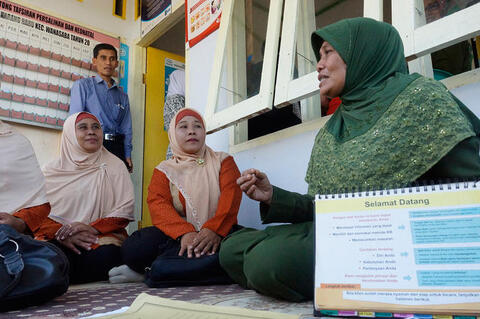
This study provides an evaluation of the outreach activity using a tablet based digital application by a faith based women's organization's (FBOs) motivators to improve the LARC use at in 4 districts in Indonesia. Promoting LARCs is challenging because there are many misconceptions, the need for husband approval, as well as conflicting belief that LARCs only are used to limit pregnancy. Thus, the MyChoice project in collaboration with two FBOs, Aisyiyah and Muslimat implemented a community outreach activity with their members of their organization. The motivators were trained in FP information and knowledge as well as in the use of digital application, to provide a clearer picture of FP overall and on LARCs. A Total of 64 informants including motivators and FP clients were interviewed and analyzed using the health belief model theory to explore FP clients' perceived benefits and barriers in adopting LARCs. The results of this evaluation shows a change in client's perception. They found the benefits of LARCs to include being able to use for a longer time, so they are more effective and efficient. Barriers such as fear of side effects and misperception of LARCs are well explained by motivators using the Tablet (Pilihanku application), so clients became more determined in making the decision for LARC adoption. Motivators play an important role becoming a source of information in reaching the client at the community level, and it is also proven that the digital application job aide supports their works in delivering information and messages.
Background/Objectives:
The use of long acting and reversible contraceptives (LARCs) including the IUD and implant is relatively low in Indonesia at 9.7% (IDHS,2017). A number of barriers have been identified including personal fear due to myths, lack of understanding, and conservative religious beliefs. Meanwhile, 8.1% of FP clients stated non-medical personnel as a source of FP information (MyChoice survey, 2015). MyChoice project collaborated with women FBOs in Indonesia (Aisyiyah and Muslimat) to provide LARC information through outreach to women in their networks. This study aims to evaluate the outreach implementation in 4 districts in Indonesia.
Description of Intervention and/or Methods/Design:
At the end of 2015, MyChoice had trained 600 FBO motivators to conduct FP outreach in their community networks. In 2018, a qualitative study using in-depth interviews was conducted with 16 motivators and 48 FP clients who had received FP information from motivators either personally or in a group outreach. The clients chosen were based on four criteria: new users who participated in personal outreach; new users who participated in group outreach; switching user who participated in personal outreach; switching user who participated in group outreach. The interview was conducted at the informants home or nearby location. Data analysis used the health belief theory to explore FP client's perceived benefits and barriers to FP adoptions.
Results/Lessons Learned:
The evaluation study found a change in perceptions of LARCs among women who received FP information from motivators. The women perceived that LARCs were efficient because of longer time of use, effective for spacing and can be removed if they are planning to have kids in the future, have better knowledge that LARCs will not move inside them, and limit their work and daily activity. The use of the tablet increased the credibility of motivators in delivering key messages, especially personal barriers to adoption such as fear of LARC side effects, misconceptions, and religious beliefs. The women felt they obtained new information about FP as a whole from the outreach conducted by the motivators. The survey found that those who received FP information through motivator outreach compared to other outreach approaches are two times more likely to have better LARC knowledge, and 1.5 times more likely to adopt a LARC.
Discussion/Implications for the Field:
Providing contraceptive method mix information including LARCs becomes a factor that drives clients to adopt LARCs. Faith based motivators play an important role to become a source of information in reaching the client at the community level. Tools such as the digital application supports their work in delivering messages, and improved their credibility. The adoption of LARCs is a major change in the client's life. Therefore, post adoption counseling and assistance is necessary and important for maintaining the continuation of LARC used. Involving community motivators can help national FP programs reach wider audiences.
Abstract submitted by:
Elfira Nacia - Johns Hopkins Center for Communication Programs (JHU CCP) Indonesia
Yunita Wahyuningrum - JHU CCP Indonesia
Arief Mochamad - JHU CCP Indonesia
Approved abstract for the postponed 2020 SBCC Summit in Marrakech, Morocco. Provided by the International Steering Committee for the Summit. Image credit: ©Harimawan Latif, Courtesy of Photoshare