










































MeroSathi: An online reservation app to reach and link high risk individuals to HIV testing services in Nepal
Summary:
Reducing the gap and attaining epidemic control in Nepal requires use of innovative approaches that address known barriers to HIV testing services. Here we document use of an online reservation app used as a social and behavioral change tool to reach and link individuals at high risk of HIV to HIV testing services in Nepal. Given the growing use of social media and online platforms in Nepal, the USAID- and PEPFAR-funded LINKAGES Nepal project introduced an online reservation application called MeroSathi (My Friend) (www.merosathi.net). MeroSathi allows users to complete an online HIV risk assessment and book HIV testing services in Nepal. A team of community members was hired to conduct online outreach by generating awareness of and demand for MeroSathi's services through public and group posts on social media, and individualized chats with clients to help them book and access HIV testing services on MeroSathi. The results presented are from MeroSathi implementation October 2018-September 2019. In total, 3,380 individuals assessed their HIV risk through MeroSathi, 61% of whom had never been tested for HIV, 617 individuals booked appointments, and 333 arrived and received HIV testing. Among the individuals tested,43% were categorized as high risk, 49% as medium risk, and 8% as low or no risk for HIV. HIV was diagnosed in 26 clients (7.8%), which demonstrates MeroSathi to be a considerably more targeted HIV testing approach than the standard physical outreach and testing approach. MeroSathi helped LINKAGES Nepal reach a segment of high-risk individuals not closely associated with previous HIV testing campaigns.
Background/Objectives:
In Nepal, close to one-third of the people estimated to be living with HIV do not know their HIV status. Reducing the gap and attaining epidemic control in Nepal requires use of innovative approaches that address known barriers to HIV testing services. Here we document use of an online reservation app used as a social and behavioral change tool to reach and link individuals at high risk of HIV to HIV testing services in Nepal.
Description of Intervention and/or Methods/Design:
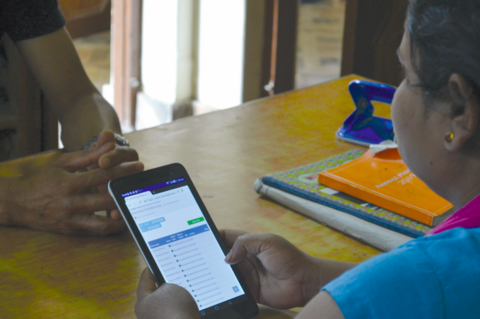
Given the growing use of social media and online platforms in Nepal,the USAID-and PEPFAR-funded LINKAGES Nepal project introduced an online reservation application called MeroSathi (My Friend) (www.merosathi.net). MeroSathi allows users to complete an online HIV risk assessment and book HIV testing services at 12 city and community clinics across 12 districts in Nepal. A team of community members was hired to conduct online outreach by generating awareness of and demand for MeroSathi's services through public and group posts on social media, and individualized chats with clients to help them book and access HIV testing services on MeroSathi. Social media influencers, including local celebrities, were engaged to communicate with their followers and mobilize them to assess their risk on MeroSathi and book services.The MeroSathi platform includes clinic login IDs that allow each clinic to securely view upcoming client appointments, report which clients arrive, and report the HIV case finding.
Results/Lessons Learned:
The results presented are from MeroSathi implementation October 2018-September 2019. In total, 3,380 individuals assessed their HIV risk through MeroSathi, 61% of whom had never been tested for HIV, 617 individuals booked appointments, and 333 arrived and received HIV testing.The mean age of the individuals tested for HIV was 26 years. Among the individuals tested,43% were categorized as high risk, 49% as medium risk, and 8% as low or no risk for HIV. HIV was diagnosed in 26 clients (7.8%),which demonstrates MeroSathi to be a considerably more targeted HIV testing approach than the standard physical outreach and testing approach, whose case finding is below one percent. Of the clients diagnosed with HIV, 69% were from the high-risk category and not previously contacted through any HIV outreach organization. With a small online outreach team, MeroSathi contributed 0.6% of total HIV tests and 2.7% of all new HIV-positive cases identified by the project.
Discussion/Implications for the Field:
MeroSathi helped LINKAGES Nepal reach a segment of high-risk individuals not closely associated with previous HIV testing campaigns. Uptake of services by clients reached through MeroSathi was likely a result of the novel method of virtual support and referrals, which may be more anonymous and convenient for clients already using a smartphone with mobile data (i.e., for middle/upper socioeconomic status). These hypotheses about client preferences and motivating factors for online booking and accessing sexual health need further exploration. LINKAGES Nepal is supporting national scale-up of these online promotional strategies to support HIV epidemic control by 2030.
Abstract submitted by:
Kiran Bam - FHI360
Benjamin Eveslage - FHI360
Rajesh Khanal - FHI360
Bhagawan Shrestha - FHI360
Approved abstract for the postponed 2020 SBCC Summit in Marrakech, Morocco. Provided by the International Steering Committee for the Summit. Image credit: LINKAGES Nepal