










































Communication Failed: Health Communication Targeted for Tribal Women and Way Forward in India
Summary:
Tribal women in India need health information in their own languages commensurate with their culture and customs. The study was conceived to assess the effectiveness and outcome of existing behaviour change communication relating to sanitation and handwashing among tribal women in India and to chart out the way forward. The study adopted experimental design. 436 women aged 18 to 49 years were selected randomly. Baseline study was conducted to ascertain their basic knowledge relating to Sanitation and Handwashing. In experimental group interpersonal communication by trained tribal women, narrow-cast of radio-magazines, broadcast of radio programmes, screening of community videos in community meetings were organised for 3 months. For control group, only the existing communication channels were used. End-line study was conducted to know the outcome of both types of communication. The comparison between the results of two studies (first conducted between April-May 2019 and end-line between September-October 2019) revealed that community-based approaches (P Process followed) coupled with communication in tribal languages by tribal women is effective in changing hand-washing and sanitation behaviour. In experimental group of villages around 80% tribal households already submitted applications for sanitary latrines; in control group it is 13%. In experimental group of villages 57% women reported practising handwashing as against 21% among control groups. The women of the former group have significantly enriched their knowledge regarding sanitation and are found to be more motivated to adopt handwashing than their counterparts of control group (p-value < 0.01).
Background/Objectives:
In India, there is wide-spread information-poverty as the registered tribal language newspapers account for only 0.25 percent of all newspaper registrations, whereas tribal population is 8.6% of Indias total population. Non-availability of IEC materials in tribal languages is a problem. Tribal women, with limited education, are landlocked with limited exposure to information. Non-tribal health workers provide them with health information often causing a language bar. The study was conceived to know the effectiveness and outcome of existing behaviour change communication relating to sanitation and handwashing among tribal women in India and to find out the way forward.
Description of Intervention and/or Methods/Design:
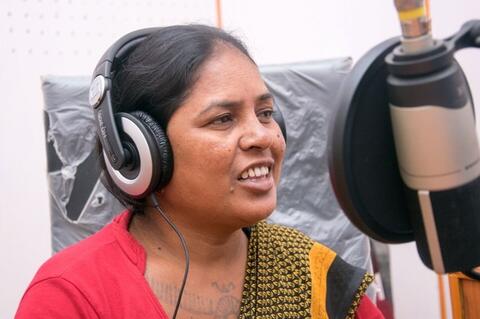
The study adopted an experimental design: 20 tribal villages were selected as experimental group whereas 20 villages with the same socio-economic status were identified as control group. In both, the groups of villages women aged between 18 to 49 years were selected randomly. Baseline study was conducted to ascertain the knowledge, attitude and practice relating to Sanitation and Handwashing. Observation Method was also used for validation of the data. In experimental group interpersonal communication by trained tribal women, narrow-cast of radio-magazines, broadcast of radio programmes, screening of community videos in their community meetings were organised for 3 months. In control group, the existing communication channels were used for the same period without giving importance to communication in tribal languages. End-line study has been conducted in both groups of villages to know the outcome of both types of communication. Total of 436 women participated in the study.
Results/Lessons Learned:
The comparison between the results of the two studies (first conducted between April and May 2019 and end-line between September and October 2019) revealed that community-based approaches (P Process followed) coupled with communication in tribal languages by tribal women is effective in changing hand-washing and sanitation behaviour. In experimental group of villages around 80% tribal households already submitted their application for building sanitary latrines whereas in control group it is only 13%. In experimental group of villages 57% of women reported that they have been cooking and serving food after proper handwashing as against 21% among control groups. However, in both the villages, availability of potable water is a problem. The women of the experimental groups of villages have significantly enriched their knowledge related to sanitation while they are found to be more motivated to adopt handwashing than their counterparts of control group (p-value < 0.01)
Discussion/Implications for the Field:
From the results of the study, it is quite evident that the existing health materials, as well as approaches, have proven not to be effective in the promotion of Sanitation and Handwashing. The tribal people have different cultures, languages/dialects, customs which should be given priority and the health workers should be from the same tribal community to make the communication programme effective. In the experimental group, it was found that the culture of cooperation and community ownership are the most essential part for the effective health communication targeted for tribal women living in the margins.
Abstract submitted by:
Nirmalya Mukherjee - Manbhum Ananda Ashram Nityananda Trust (MANT)
Shipra Joshi - MANT
Arpita Mitra - MANT
Approved abstract for the postponed 2020 SBCC Summit in Marrakech, Morocco. Provided by the International Steering Committee for the Summit. Image credit: MANT