











































Using social practice theory to explain the practice of separate collection of plastic waste: a multiple case study
Summary:
Improper management of plastic waste is a serious environmental health issue. Recycling can only be a viable solution if villagers know how to collect waste separately. Most interventional strategies focus on individual efficacy. Few studies argue the act of separate collection as a practice, being socially practised. The aim of this qualitative study was to understand the practice or non-practice of the separate collection of plastic waste in rural, ethnic-based households and to analyse how the elements (meaning, competence and material) of such social practice are adopted and performed by household villagers. Methods: A multiple case study nested within a randomised controlled trial on plastic waste management practice was conducted in traditional, Dong-ethnic group Bapa village in an autonomous prefecture in rural Guizhou in October 2017. Framed under the theories of social practice, local cases were purposively selected based on their practice status of separate collection. Qualitative data on the know-how and meaning of, resource required for such practice were collected from different sources. Results: Ten cases were chosen and revealed neutral or positive connotations of the meaning of separation, varied understanding of what to be put in the collection bin and continued use and maintenance of the plastic waste collection bin. Implications for the Field: taking separate collection of plastic waste as a social practice offers an alternative, social lens to explain why and why not households practise it as practitioners. Implications can be drawn to guide future health promotion effort in rural contexts.
Background/Objectives:
Improper management of plastic waste is a serious environmental health issue in rural China. Recycling can be a viable solution only when villagers know how to collect waste separately. In the literature, most intervention strategies focus on individual efficacy. Few studies argue the act of separate collection as a practice, being socially practised. The aim of this qualitative study was to understand the practice or non-practice of the separate collection of plastic waste in rural, ethnic-based households and to analyse how the elements (meaning, competence and material) of such social practice are adopted and performed by household villagers.
Description of Intervention and/or Methods/Design:
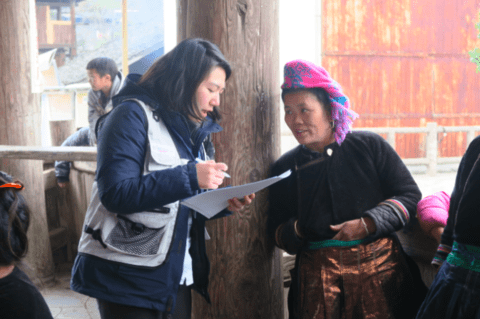
A multiple case study nested within a randomised controlled trial on plastic waste management practice was conducted in traditional, Dong-ethnic group village in an autonomous prefecture in rural Congjiang county, Guizhou. Framed under the theories of social practice, local cases were purposively selected based on their practice status of separate collection. Qualitative data on the know-how and meaning of, resource required for such practice were collected from brief case study interviews, non-participant observation notes, elicitation techniques (free-listing and pile sort) and photos of plastic waste. Data were analysed qualitatively by cross-case analysis and pattern matching.
Results/Lessons Learned:
Ten cases were purposively chosen. Through cross-examination, the cases that carried out the practice had these components in common: revealed neutral or positive connotations of the meaning of separation, clear understanding of what to be put in the collection bin and continued use and maintenance of the plastic waste collection bin. The linkage between the three elements varied, which may affect the performance of the practice. Missing one of components in the practice may or may not lead to continued separate collection. Possible competitors for the practice should also be noted.
Discussion/Implications for the Field:
Framing separate collection of plastic waste as a social practice offers alternatives to explain why, as practitioners, and why not households practise it. This would widen our understanding beyond p-values to explain why an intervention works and what aspects may not be effective from a social, collective perspective. Implications of framing an intervention as social practice can be drawn to guide future health promotion effort in rural contexts. Instead of targeting individual efficacy, more attention can be drawn to an intervention that the whole community can practise it socially.
Abstract submitted by:
Kelvin Ling - Chinese University of Hong Kong
May Pui Shan Yeung - Chinese University of Hong Kong
Emily Ying Yang Chan - Chinese University of Hong Kong
Approved abstract for the postponed 2020 SBCC Summit in Marrakech, Morocco. Provided by the International Steering Committee for the Summit. Image credit: Collaborating Centre for Oxford University and CUHK for Disaster and Medical Humanitarian Response (CCOUC)