










































What works to engage radio listeners and help them manage their money in Myanmar?
Summary:
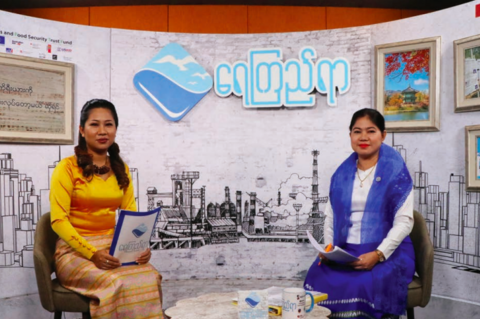
Between 2016 and 2019, BBC Media Action broadcast Yay Kyi Yar (Towards Clearer Water), a radio programme designed to support migrants and rural communities across Myanmar to make informed decisions about migration and financial issues. At the start of the project, formative qualitative research was used to explore catalysts and barriers for change related to jobs and money, exploring knowledge levels, attitudes and behaviours across the country. Insights from this study shaped many aspects of Yay Kyi Yar including its tone, format, the communication objectives and topics covered, and the devices used in the programme. A mixed methods evaluation conducted in 2018 found that the programme reached 3.2 million adult listeners in Myanmar (23% of the country's radio listeners), with 1.8 million tuning in regularly. The programme's entertaining 'Mr Money' character was cited as the main reason listeners tuned in. Audiences loved his funny, punchy anecdotes, his practical tips, and his attempts and ideas to manage his own money. Listeners were also driven by stories of 'people like them' achieving things they had not thought possible, motivating many to change their own money management practices. As a result, 57% of regular listeners reported taking action to manage their money differently after listening to the programme. This presentation will explore how findings from formative research informed the development of Yay Kyi Yar, what communication devices the programme used to engage, inform and motivate audiences, and the subsequent impact this had on audiences' knowledge, confidence to overcome barriers, and money management practices.
Background/Objectives:
With funding from the Livelihoods and Food Security Fund (LIFT), BBC Media Action delivered a media and communication project between 2016 and 2019. The project aimed to provide information to Myanmar audiences, support CSOs, and improve the capacity of media to address migration and financial management themes in Myanmar. This included producing a factual magazine programme, Yay Kyi Yar, which aired weekly on national broadcaster, Myanmar Radio, and a community radio station in Thailand. Using a mix of information, entertainment, expert interviews, inspiring stories and discussion, the radio show covered a wide range of topics related to migration and money.
Description of Intervention and/or Methods/Design:
Audience research was used throughout the project to inform, adapt and evaluate the radio programme. Formative qualitative research was undertaken in March 2017 in Yangon, the Delta, Dry zone and Shan state. This informed the project's theory of change and the programme's design. Once on air, regular audience feedback was gathered from 'Listener Clubs' to help the production team refine content. In late 2018 a mixed methods evaluation was conducted to measure the reach of the programme and explore the impact of exposure on audiences' knowledge, discussion, ability to overcome barriers, and practices around financial management and migration. First, BBC Media Action conducted in-depth interviews with 47 regular Yay Kyi Yar listeners. This was followed by a nationwide quantitative household survey, fielded in December 2018 (main sample n=3,000, plus booster sample of regular Yay Kyi Yar listeners n=300). Regression analysis was used to compare differences between exposed and unexposed groups.
Results/Lessons Learned:
Through understanding audience members' priorities, views and experiences around financial management, Yay Kyi Yar successfully engaged and inspired people across Myanmar. The evaluation found listeners were most interested in content directly relevant to them. For most Myanmar households, this means information about how to make money go further. Listeners were more likely to act upon simple guidance that was easy to put into practice particularly when explained by Mr Money. Real life stories were also effective at inspiring and motivating listeners to consider changes in their own lives. The quantitative research found that the programme was a catalyst for change: regular listeners reported knowing more about money from the programme, felt more confident to manage their money and were more likely to be discussing money matters, compared with non-listeners. Regular listeners were 1.6 times more likely than non-listeners to say they were saving regularly, when controlling for other key variables.
Discussion/Implications for the Field:
This project provides important learnings on what works to engage radio audiences in Myanmar and influence their money management practices, helping them overcome barriers. It highlights the importance of understanding audiences' lives in order to develop a programme which resonates with audiences. The programme provides an example of techniques that can be successfully employed within behaviour change communication to prompt discussion and action, such as: humour and entertainment, the provision of simple tips that do not require external resources, and role-modelling through inspiring stories.
Abstract submitted by:
Sally Gowland - BBC Media Action
Anna Colquhoun - BBC Media Action
Muk Yin Haung Nyoi - BBC Media Action
Approved abstract for the postponed 2020 SBCC Summit in Marrakech, Morocco. Provided by the International Steering Committee for the Summit. Image credit: BBC Media Action