










































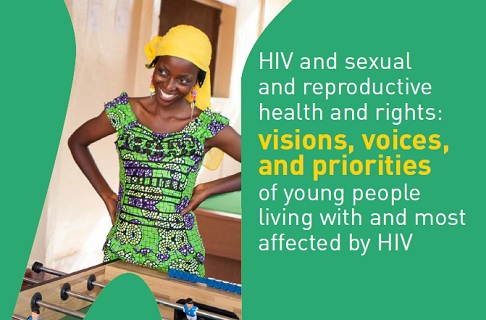
HIV and Sexual and Reproductive Health and Rights: Visions, Voices, and Priorities of Young People Living With and Most Affected by HIV
"These face-to-face dialogues created a platform for young people living with and most affected by HIV to share their lived experiences of and hope for: accessing HIV and SRH services, including family planning and contraceptives; participating in decision-making both in their personal lives and in programming and policy; and, their vision for realizing their sexual and reproductive rights."
This 30-page report shares perspectives and insights from young people from around the world living with and affected by HIV, who share their visions for realising and claiming their sexual and reproductive health and rights (SRHR) and for setting priorities for HIV and SRHR integration. The publication was produced by the Link Up project, as part of discussions held to help advocate for young people to be a priority when setting development agendas, particularly within the emerging post-2015 framework.
The Link Up project is being implemented by a consortium of global and national partners, working with young people aged 10 to 24 years old, with a specific focus on young men who have sex with men, young people who do sex work, young people who use drugs, young transgender people, and young women and men living with HIV. Two consortium partners, the Global Youth Coalition on HIV/AIDS (GYCA) and the ATHENA Network led consultations with young people, which involved nearly 800 people from around the world who responded to a global online survey, and over 400 young people who participated in a series of community dialogues and focus groups with national partners in Ethiopia, Uganda, Burundi, Bangladesh, and Myanmar.
The report discusses five "vision areas for positive change" that emerged from the consultations, and outlines the related recommendations that emerged, which speak to young peoples’ shared perspectives on what is needed to achieve real progress. For each vision area, a case study of a Link Up best practice that could be replicated is profiled, to help inspire implementation of the recommendations.
The first vision or priority area expressed by youth involved "providing quality, tailored sexual and reproductive health services from ethical and well-trained health service providers tailored to the needs, rights, and desires of young people - especially those living with and most affective by HIV."
The second priority related to protecting, respecting, and promoting young people’s sexual and reproductive rights, and recommendations included among other things eliminating discriminatory laws and policies that criminalise or stigmatise HIV exposure and transmission, same-sex sexual activity and relationships, abortion, drug use, and sex work.
The third vision area focuses on ensuring "full access to age-appropriate information and education on HIV and sexual and reproductive health and rights, including on sexual orientation and gender identity." Participants in the consultation described how lack of information and insufficient SRHR education affected their lives and their ability to protect their sexual health. "Thirty-two percent of e-consultation participants said SRH education was not accessible in their communities. Among those living with HIV, that number rose to 44%." The resulting recommendations include ensuring that all young people have access to "tailored, rights-based comprehensive sexuality education (including HIV, gender identity, sexual orientation, and sexual pleasure)," and that barriers, such as legal or policy restrictions that restrict young people from accessing information, are addressed.
The fourth vision area tackles the issue of gender-based violence, including sexual violence, in all its forms, such as on the basis of sexual orientation and gender identity, and recommends comprehensive programming to tackle both violence and harmful gender norms.
The fifth vision area centres on the need to "meaningfully engage young people, in all their diversity, in all decision-making that affects their lives." Young people know best about the issues that affect them, and providing spaces for exchanging experience and for their voices to be heard enables them to both makes sense of their own experiences, and begin to plan for collective action. "Participants in the consultation repeatedly called on policy and programme makers (both local and global) to ensure their full and active participation at every stage of the process, from inception and design through implementation, monitoring, and evaluation."
AIDS Alliance website on August 31 2015.
- Log in to post comments