










































If we don't report child sexual abuse, it won't stop.
Summary:
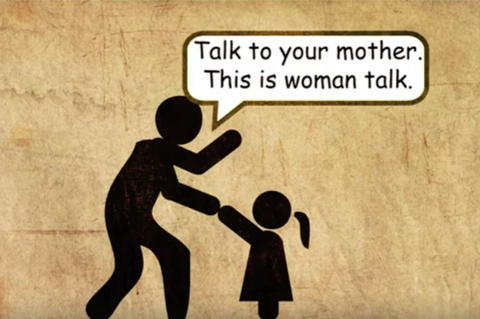
Evidence shows that sexual exploitation and abuse can have serious short and long-term physical, psychological and social consequences for girls and boys. These include increased risks for illness, unwanted pregnancy, psychological distress, discrimination and difficulties at school, hence the need to adopt zero tolerance towards this crime. The extent of child sexual abuse is unclear as reporting is low in Botswana (Botswana Police Commissioner). It often happens that a child is not taken seriously, a perpetrator is protected or families settle a case within their homes. Child sexual abuse is an urgent agenda that requires catalytic action by the community and citizens to Be the Voice for Our Children. The 5 minute infomercial, which Stepping Stones International and beneficiaries produced, presents information and solutions to the underreporting of child sexual abuse by answering the basic question of 'why is it important to report and what are long-term effects for a child if crime is not reported. By understanding these effects, more people will react and report the way Thato* did after viewing the infomercial stating, I did not know what my Uncle was doing was wrong, but I knew it hurt me. The infomercial is the springboard for action which strives towards the realization of Sustainable Development Goal (SDG) 5 on Gender Equality, Target 5.2 to eliminate all forms of violence against all women and girls in the public and private spheres, including trafficking and sexual and other types of exploitation.
Background/Objectives:
Defilement statistics of 617 cases reported in 2016, mean that Botswana should give child sexual abuse the status of epidemic. Sexual abuse, mostly committed by a known individual, betrays what the child sees as his or her safe world. 'Be the Voice of Our Children's purpose is to inform parents/caregivers, service providers, communities to take action against child sexual abuse and exploitation. The infomercial provides widely unknown information in Botswana. The infomercial establishes three learning objectives: the harmful effects of child sexual abuse; how to respond to a case of child abuse and the importance of (timely) reporting.
Results/Lessons Learned:
The use of a human centered design with target groups developing and testing the infomercial led to positive increase in understanding the importance of reporting child sexual abuse. The effectiveness of the infomercial has been tested using pre- and post-tests with youth, grandmothers and parents. Results show that the people who watched the infomercial scored significantly better (14.5% better on the post-test). Youth who watched the infomercial without discussion score 9.1% better at the post-test, while those who watched and discussed after scored 21.0% better. Testing participants aided in improving the dialogue guide, since it identified gaps or where misunderstandings remained. The infomercial was shown 55 times on national television provoking other civil society organisations to use it in their programs and for USAID to consider its use for faith based organisations. It is recommended to complement the infomercial with the interactive dialogue, however there is increase in knowledge either way.
Discussion/Implications for the Field:
The infomercial emphasizes the importance of reporting and is used as a springboard for discussion. The video can be easily adapted and amended for use in other, such as changing the voices or voice-overs, adding subtitles or adding country specific information. The accompanying dialogue discussion points can be used in sessions with community, parent groups, leaders or at schools. It can also be shown on television as a platform for discussion by government, leaders, faith based organisations. The video can support and accompany evidence-based community programs such as SASA! or Stepping Stones.
Abstract submitted by:
Lisa Jamu - Stepping Stones International
Jeldau Rieff - Stepping Stones International
Evidence shows that sexual exploitation and abuse can have serious short and long-term physical, psychological and social consequences for girls and boys. These include increased risks for illness, unwanted pregnancy, psychological distress, discrimination and difficulties at school, hence the need to adopt zero tolerance towards this crime. The extent of child sexual abuse is unclear as reporting is low in Botswana (Botswana Police Commissioner). It often happens that a child is not taken seriously, a perpetrator is protected or families settle a case within their homes. Child sexual abuse is an urgent agenda that requires catalytic action by the community and citizens to Be the Voice for Our Children. The 5 minute infomercial, which Stepping Stones International and beneficiaries produced, presents information and solutions to the underreporting of child sexual abuse by answering the basic question of 'why is it important to report and what are long-term effects for a child if crime is not reported. By understanding these effects, more people will react and report the way Thato* did after viewing the infomercial stating, I did not know what my Uncle was doing was wrong, but I knew it hurt me. The infomercial is the springboard for action which strives towards the realization of Sustainable Development Goal (SDG) 5 on Gender Equality, Target 5.2 to eliminate all forms of violence against all women and girls in the public and private spheres, including trafficking and sexual and other types of exploitation.
Background/Objectives:
Defilement statistics of 617 cases reported in 2016, mean that Botswana should give child sexual abuse the status of epidemic. Sexual abuse, mostly committed by a known individual, betrays what the child sees as his or her safe world. 'Be the Voice of Our Children's purpose is to inform parents/caregivers, service providers, communities to take action against child sexual abuse and exploitation. The infomercial provides widely unknown information in Botswana. The infomercial establishes three learning objectives: the harmful effects of child sexual abuse; how to respond to a case of child abuse and the importance of (timely) reporting.
Results/Lessons Learned:
The use of a human centered design with target groups developing and testing the infomercial led to positive increase in understanding the importance of reporting child sexual abuse. The effectiveness of the infomercial has been tested using pre- and post-tests with youth, grandmothers and parents. Results show that the people who watched the infomercial scored significantly better (14.5% better on the post-test). Youth who watched the infomercial without discussion score 9.1% better at the post-test, while those who watched and discussed after scored 21.0% better. Testing participants aided in improving the dialogue guide, since it identified gaps or where misunderstandings remained. The infomercial was shown 55 times on national television provoking other civil society organisations to use it in their programs and for USAID to consider its use for faith based organisations. It is recommended to complement the infomercial with the interactive dialogue, however there is increase in knowledge either way.
Discussion/Implications for the Field:
The infomercial emphasizes the importance of reporting and is used as a springboard for discussion. The video can be easily adapted and amended for use in other, such as changing the voices or voice-overs, adding subtitles or adding country specific information. The accompanying dialogue discussion points can be used in sessions with community, parent groups, leaders or at schools. It can also be shown on television as a platform for discussion by government, leaders, faith based organisations. The video can support and accompany evidence-based community programs such as SASA! or Stepping Stones.
Abstract submitted by:
Lisa Jamu - Stepping Stones International
Jeldau Rieff - Stepping Stones International
Source
Approved abstract for the postponed 2020 SBCC Summit in Marrakech, Morocco. Provided by the International Steering Committee for the Summit. Image credit: Stepping Stones International