










































Transforming the Delivery of Wide-ranging Reproductive Health Information Using an On-Demand Mobile Information Service
Summary:
Uganda is a low-income country with a high fertility rate (5.4 births/woman), an unmet need for family planning (28%), low modern contraceptive use (35%), and a high teenage pregnancy rate (25%). The knowledge of at least one contraception method is nearly universal but comprehensive knowledge of all methods is still low contributing to inconsistent use, the high drop off rate of family planning methods. Of all contraceptive users 45% discontinued use within 12 months with 35% citing method-related health concerns or side effects. Uganda has a high mobile phone penetration with 70% owning mobile phones. PSI Uganda created short, comprehensive and multilingual messages hosted the country's largest mobile network, Airtel. These messages are accessed on demand through IVR, SMS and USSD for free by anyone, anywhere and at any time. Results show that most of the platform users are male, 79% of the users are under 24, 90% of users prefer voice option and over 45% prefer to prefer this information in their local languages. The results highlight that men's interest in RH information and prioritized as key influencers. Young people prefer to receive RH or SRH information through more confidential platforms. People are more likely to request for information when broken down to their local languages.
Background/Objectives:
In Uganda, knowledge of at least one modern contraception method is nearly universal. However, comprehensive knowledge of all contraception methods remains low, contributing to the high discontinuation rate (45%). There is also less knowledge of long acting reversible contraceptives, which is often smeared with misinformation, myths and misconceptions. The rapidly growing mobile phone penetration in Uganda (estimated at 65 per cent in 2015) provides an opportunity to increase access to information. At the individual level, 70.9% own a mobile phone though with location and gender variances in use. These gaps can be reduced by utilizing mobile phones to channel comprehensive, multilingual, accurate and age appropriate information.
Description of Intervention and/or Methods/Design:
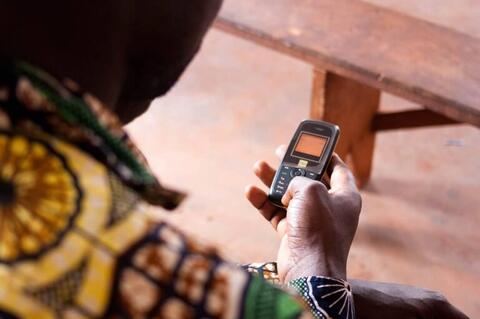
With the objective of expanding reproductive health information packages to Ugandans, PSI Uganda partnered with Viamo International and Ministry of Health to develop multilingual key messages hosted on the 161 Service in November 2017. The OnDemand mobile information service is powered by Airtel, one of Uganda's leading telecoms covering over 9 million users. The messages were broken down into various topics and translated into 6 local languages.On this platform, anyone, without internet, on both a smart or feature phone can access this comprehensive, multilingual, accurate and age appropriate information by simply dialing *161#. One can proactively retrieve the information in either voice, USSD or text format. The 161 Service in turn collects metadata on all calls, SMS and USSD requests tracking message selection, demographics, call volume, percent of message listened to, repeat users.
Results/Lessons Learned:
PSI are the content partners for three health topics on the 1-6-1 Service these include; Family Planning, Maternal and Child Health and Cervical Cancer. During the reporting period that captures engagements of the 3 content between November 2017 September 2019. The platform has registered over 1,922,086 interactions, with an average of over 800,000 callers per month, Family Planning is the most accessed at 55.7%. With 79% of the users are under 24 with 54% between 18 - 24-year old and 25% under 18 years. Ninety percent of the clients interacted with the Platform via IVR (Voice option). The average PSI Health content listener is Male, aged between 18 - 24 years old and is from Central region. Luganda and 4R are the most common languages used by registered content listeners, with 45% for Luganda, 38% for 4R and 11% for English.
Discussion/Implications for the Field:
Young people and men are utilizing the platform, this could be attributed to its confidentiality. SBCC efforts for youth should explore discrete options. People prefer voice option, over USSD and SMS meaning media is shifting to easy access forms. Capitalizing on people's mobile phone use allows for more in-depth interaction with reference to this message since they can retrieve at any time for free. People prefer to receive or seek information in their local languages as opposed to English. This shows us that while designing SBCC interventions, more attention should be given to translating materials to local languages.
Abstract submitted by:
Elizabeth Kemigisha - Population Services International (PSI) Uganda
Baker Lukwago - PSI Uganda
Peter Buyungo - PSI Uganda
Fred Gyavira Kyaka - PSI Uganda
Approved abstract for the postponed 2020 SBCC Summit in Marrakech, Morocco. Provided by the International Steering Committee for the Summit. Image credit: PSI