










































Radio Distance Learning and Real-Time Evidence Generate Dialogue for Improved HPV Vaccination
Summary:
The success C4D programs largely depends on their ability and motivation of frontline workers to perform their roles effectively. These workers are widely spread and numerous, a situation that makes it difficult to provide face-to-face trainings. In addition, evidence generation is often hampered by bottlenecks related to logistics, finances, time and human resources. In 2019, UNICEF Malawi implemented a Human Papilloma Virus (HPV) immunization campaign aiming to prevent cervical cancer. To address the challenge of real time data, UNICEF utilized an SMS-based survey, named U-report, and social media listening to conduct an initial situation analysis followed by assessment of the campaign results on knowledge, perceptions and existing practices related to HPV. The results were used to inform advocacy and social mobilization interventions. Social media insights were collected daily and used as themes for weekly radio-based community and national dialogues with service providers and policy makers. UNICEF addressed the challenge of face-to-face trainings by using the innovative Radio Distance Learning (RDL) approach through which frontline workers were empowered with interpersonal communication skills through interactive radio programs. Key improvements were noted on levels of knowledge, attitudes and practices regarding HPV vaccination. For instance, in August 2018, 23% of girls below the age of 14 believed they were not at risk of contracting HPV. By April 2019 only 8% believed they were not at risk. The intervention demonstrates that evidence generation through e-based platforms provides reliable results and enables responsive programming through real time analysis.
Background/Objectives:
Teachers and Health Surveillance Assistants (HSAs) as frontline workers require capacity strengthening in terms of knowledge and skills building. However, they are widely spread, and numerous, so it will be difficult if not impossible to provide them with this ongoing support face-to-face. On the other hand, information gathering is often hampered by logistical, financial, time and human resources related bottlenecks. M-Health and e-platforms can help overcoming theses bottlenecks, improving real time data collection to inform programming. This presentation will demonstrate how e-platforms can inform decision making in project programming and implementation.
Description Of Intervention And/or Methods/Design:
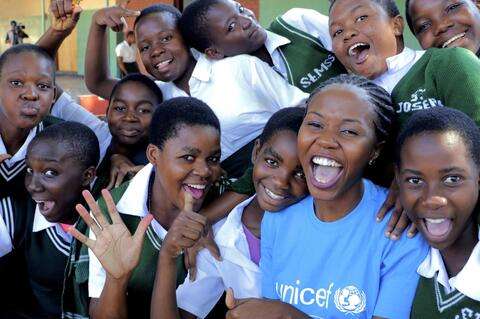
In January 2019, UNICEF Malawi implemented a Human Papilloma Virus (HPV) immunization campaign aiming at preventing cervical cancer among women through vaccination during early adolescence. UNICEF utilized an SMS-based survey, named U-report, and social media listening to conduct an initial situation analysis followed by the assessment of the campaign results on knowledge, perceptions and existing practices related to HPV. The results were used to inform advocacy and social mobilization interventions. For instance, to address low risk perception on the danger of cervical cancer, programs were designed to raise young girls and their parents' perception of risk and enhance their self-efficacy. Social media insights were collected daily and used as themes for weekly radio-based community and national dialogues with service providers and policy makers. The programs aimed at promoting immunization demand as well as increasing citizen's voice to address system- and service-related challenges.
Results/Lessons Learned:
Changes were observed in knowledge, attitudes and practices regarding HPV vaccination. For instance, in August 2018, 23% of girls below the age of 14 believed they were not at risk of contracting HPV. By April 2019 only 8% believed they were not at risk. In 2018, 68% of girls below 14 years would accept HPV vaccination, whereas in 2019 the acceptance was 81%. In 2018, 30% of respondents believed girls aged 9 should not receive HPV vaccination. Six months later, after the communication campaign, the percentage dropped to 13%, with 81% believing it is proper for girls to receive the vaccine . The intervention demonstrates that evidence generation through e-based platforms provides enables responsive programming through real time analysis. It also highlights the importance of Radio Distance Learning as an innovative tool that addresses the challenge of cascaded face-to-face trainings.
Discussion/Implications For The Field:
SBCC needs to embrace e-based technologies for monitoring and evaluation. There is growing evidence that these methods provide reliable information for decision making e.g. through the large samples that decrease the margin of error. Faced by the challenge of financial scale, SBCC needs to deploy innovative methods of content delivery to improve interpersonal communication skills of frontline workers. Radio Distance Learning forms part of such innovations.
Abstract submitted by:
Chancy Mauluka - UNICEF
Approved abstract for the postponed 2020 SBCC Summit in Marrakech, Morocco. Provided by the International Steering Committee for the Summit. Image credit: UNICEF